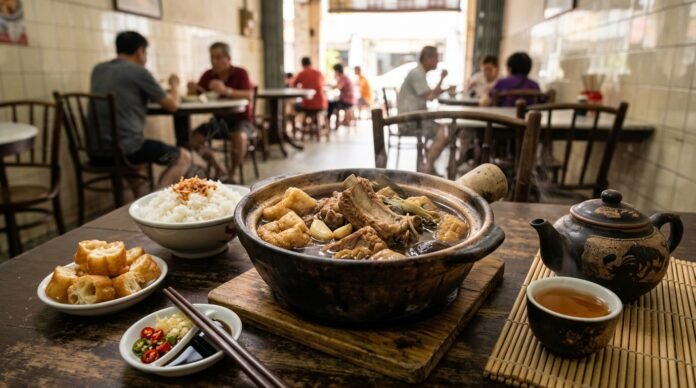

Most people go to Klang for one reason: bak kut teh. And that alone is a good enough reason to make the trip, because Klang is where the dish was born and it’s still where the best of it is served.
But there’s a better version of this day out. Klang was the royal capital of Selangor before Kuala Lumpur existed, and its old town is full of colonial buildings, a proper Little India, temples and one of the best small museums in the country. Do it right and you get a morning of history and a lunch you’ll still be thinking about on the train home. And the train is the key word, because this is one of the few trips out of KL where you genuinely don’t need a car.
Some links in this post are affiliate links. If you book through them, I earn a small commission at no extra cost to you. Thanks for supporting the blog.
The short version
- Why go: The birthplace of bak kut teh, plus a walkable royal old town most visitors never see.
- Distance: About 30 km southwest of KL, roughly an hour on the train.
- Getting there: KTM Komuter from KL Sentral, straight to Klang station. No car needed, and that’s rare for a day trip here.
- Time needed: Half a day is plenty. A relaxed full day if you add lunch, the museum and a wander.
- Go early. The famous bak kut teh shops open at breakfast and the best ones sell out by early afternoon.
- Best for: Food lovers, and anyone who likes history without the crowds.
On prices: the figures below are rough guides. Bak kut teh is cheap, but portions and rates vary shop to shop, so treat any number as indicative.
Bak kut teh, and why Klang is the place to eat it
Bak kut teh means “meat bone tea” in Hokkien. There’s no tea in it. It’s pork ribs and other cuts slow-simmered for hours in a dark broth of herbs and spices, served with rice, dough fritters for dipping, and a pot of actual tea on the side to cut the richness. It’s one of Malaysia’s great dishes, and Klang is widely accepted as its birthplace.
The story goes that it was created here for the labourers working the port in the early 20th century. Cheap, filling, restorative, and eaten first thing in the morning. That breakfast tradition survives, and it’s the first thing a visitor needs to understand: locals eat bak kut teh at 7am, not 7pm.
Klang style versus the rest
Not all bak kut teh is the same, and Klang’s is distinct. The broth here leans herbal and dark, built on dong quai and other Chinese medicinal herbs, so it’s thick, aromatic, and slightly bitter-sweet. The peppery, lighter, more soup-like version you find in Singapore and parts of southern Malaysia is a different animal entirely. If you’ve only ever had the peppery kind, Klang will surprise you.
You’ll see two forms on the menu. Soup is the classic, ribs in the herbal broth. Dry is a later invention, the meat reduced down with a thick dark gravy, dried chilli, okra, and often cuttlefish. Punchier and stickier. Order both between two people, add greens and tofu puffs, dip the fried dough in the broth, and you’ve had it properly. For the wider picture, our best Malaysian dishes guide and the KL food guide are good starting points.
Where to eat it
Klang is said to have well over a hundred bak kut teh shops, and the truth is a lot of them are good. You don’t need to hunt down one legendary stall. That said, a few names come up again and again, and most cluster in the Teluk Pulai and Taman Intan area, plus a strip of long-running shops around the old town near the station.
Names you’ll hear locals and regulars mention include Teluk Pulai, Seng Huat (famous for being tucked under a bridge), and a run of decades-old shops around Jalan Stesen near the railway station. I’m not going to rank them for you, partly because it’s genuinely personal and partly because the difference between the top ten is small. Pick one that’s busy with locals and you’ll eat well.
Three rules that matter more than which shop you choose:
- Go early. This is the big one. The best shops open around 7am and the popular ones can sell out by early or mid afternoon. Turn up at 2pm and you may find the shutters down. Aim for breakfast or an early lunch.
- Bring cash. Many of these are old-school shops. Don’t assume cards.
- Expect to share a table and wait at peak times. That’s a good sign, not a bad one.
Prices are low. A single portion is usually in the mid-teens of ringgit, and a full spread for two with rice, tea and sides rarely feels expensive. Confirm at the shop, since portions and rates vary.
The royal old town, which most visitors skip
Here’s what turns Klang from a food run into a proper day trip. Long before Kuala Lumpur existed, Klang was the royal capital of Selangor. It was a tin-trading town on the river with a history going back centuries, and the sultan’s connection to the town survives to this day. The old centre is compact, walkable, and full of things worth an hour of your morning.
Sultan Abdul Aziz Royal Gallery
If you do one non-food thing in Klang, make it this. The Royal Gallery sits in a beautiful colonial building designed by A.B. Hubback, the same architect behind several of KL’s landmarks, and inside it tells the story of the Selangor sultanate through regalia, gifts, photographs and the personal collection of the late Sultan Salahuddin Abdul Aziz Shah, who was also King of Malaysia. It’s not enormous, an hour does it, but it’s one of the better small museums in the country and entry is free.
It’s usually open Tuesday to Sunday, roughly 10am to 5pm, and it’s about a hundred metres from Klang station, so it’s the natural place to start. Photography inside is generally not allowed, and since it honours royal heritage, dress modestly. Our guide to cultural etiquette covers the basics.
The heritage walk (when it’s running)
Klang’s municipal council and Tourism Selangor run a free guided Royal Klang Town Heritage Walk that starts at the Royal Gallery, covers around eleven historic sites in under 4 km, and takes about two and a half hours. When it runs, it’s an excellent way to see the town, with access to a few interiors you can’t reach on your own.
One honest caveat: the walk has been on and off in recent years, and at times it hasn’t operated at all. Don’t build your whole day around it. If it’s running, brilliant. If not, the route is easy to do yourself on foot, though you’ll only see the exteriors. Check with the council before you travel if the guided version matters to you.
What you’ll see on the route
- Little India (Tengku Kelana Street). One of the most vibrant Indian quarters in the country. Sari shops, spice and snack stalls, gold, garlands, and the smell of frying everything. Great for browsing and even better for eating.
- The old Chartered Bank building, Klang’s first bank, now a silk and sari shop.
- Temples and mosques, including the Sri Nagara Thendayuthapani Temple and the Tengku Kelana Indian Muslim Mosque, side by side with churches and the Chinese shophouses. Klang wears its multiculturalism plainly.
- Colonial civic buildings, including a Victorian-era fire station and the views up toward Istana Alam Shah, the sultan’s palace on the hill.
One thing to skip: Gedung Raja Abdullah, the old tin warehouse, is one of the oldest buildings in Selangor but has been closed to visitors for years. Admire it from outside and move on.
How to get to Klang from KL
This is the trip’s other quiet strength. Unlike most day trips out of KL, where public transport is either painful or non-existent, Klang is genuinely easy without a car.
| Option | Time | Rough cost | Notes |
|---|---|---|---|
| KTM Komuter | About 1 hour | A few ringgit | The easy answer. Drops you in the old town. |
| Grab | 40 to 60 min | Around RM30 to RM55 | Door to door, good for an early start. |
| Driving | 40 to 60 min | Petrol and parking | Only if you already have a car. |
The train, step by step
From KL Sentral, take the KTM Komuter Port Klang line heading toward Port Klang, and get off at Klang station. Not Port Klang, which is several stops further on. The ride is about an hour, trains run through the day, and the old town, the Royal Gallery and Little India are all within a short walk of the station.
A few practical notes. Trains can be spaced out, sometimes only every half hour or so, so check the schedule rather than just turning up. Our KL rail guide explains how KTM Komuter fits alongside the MRT and LRT. And once you’re in Klang, if you want to reach a bak kut teh shop that isn’t in the old town, a short Grab hop covers it.
Because it’s this easy by train, Klang is one of the rare trips where I’d actively tell you not to bother with a car. Take the Komuter, eat too much, and doze on the way home.
A half day that works
The trick is to eat first, while the bak kut teh is still being served, then walk it off in the old town.
| Time | What |
|---|---|
| 8.00am | KTM Komuter from KL Sentral toward Port Klang. |
| 9.00am | Arrive Klang. Straight to bak kut teh breakfast. Bring cash. |
| 10.15am | Sultan Abdul Aziz Royal Gallery, once it opens at 10am. |
| 11.15am | Walk the old town. Colonial buildings, temples, the river. |
| 12.00pm | Little India on Tengku Kelana Street. Browse, snack, buy sweets. |
| 1.00pm | Optional second lunch, then the train home. |
That’s a relaxed half day. If you’d rather make a full day of it, slow everything down, add the heritage walk if it’s running, and linger in Little India.
Common mistakes
- Going for a late lunch. The famous bak kut teh shops sell out. Treat it as breakfast or early lunch, not a 2pm plan.
- Getting off at Port Klang. You want Klang station, several stops before the port.
- Building the day around the heritage walk. It runs intermittently. Have a plan B.
- Bringing no cash. The old shops and Little India stalls often don’t take cards.
- Driving. Old-town parking is a hassle. The train drops you in the middle of everything.
- Expecting the tin museum. Gedung Raja Abdullah has been shut for years. Don’t plan around it.
- Only eating once. You came to Klang to eat. Have the bak kut teh, then have a snack in Little India too.
Is Klang worth a day trip?
If you like food, yes, easily. Eating bak kut teh where it was invented, in the herbal Klang style, is one of those simple, memorable things that a trip to Malaysia is actually about. Add a free royal museum, a genuine Little India, and an easy train there and back, and it’s a lovely, low-effort half day.
Be honest with yourself about what it is, though. Klang is a working town, not a polished tourist site. The appeal is the food, the history and the ordinary everyday texture of the place, not manicured attractions. If you need big-ticket sights, this isn’t your trip, and a day in Melaka might suit you better. But if a great cheap meal and a wander through a real old town sounds like your kind of day, Klang delivers.
Frequently asked questions
How do I get from KL to Klang?
Take the KTM Komuter train on the Port Klang line from KL Sentral and get off at Klang station, about an hour away. Make sure you alight at Klang, not Port Klang, which is several stops further. The old town, Royal Gallery and Little India are all a short walk from the station, so no car is needed.
Why is Klang famous for bak kut teh?
Klang is widely regarded as the birthplace of bak kut teh, the herbal pork rib soup, said to have been created for port labourers in the early 20th century. The Klang style is dark and herbal, built on dong quai and other herbs, which sets it apart from the peppery version common in Singapore and southern Malaysia.
What time should I go to Klang for bak kut teh?
Early. It is traditionally a breakfast dish, and the famous shops open around 7am and can sell out by early or mid afternoon. Aim to eat between breakfast and early lunch, and bring cash, as many shops do not take cards.
What else is there to do in Klang besides eat?
Plenty. Klang was the royal capital of Selangor, and its old town has the free Sultan Abdul Aziz Royal Gallery, a lively Little India on Tengku Kelana Street, colonial buildings, temples and mosques. A free heritage walk runs from the Royal Gallery when it is operating, though it has been intermittent in recent years.
How long do I need in Klang?
Half a day is enough to eat well and see the old town. Make it a full day if you want to take the heritage walk, linger in Little India, and eat more than once.
Is the Royal Gallery worth visiting?
Yes. It is one of the better small museums in Malaysia, it is free, and it sits in a striking colonial building about a hundred metres from the station. Allow about an hour. It is usually open Tuesday to Sunday, and photography inside is generally not permitted.

