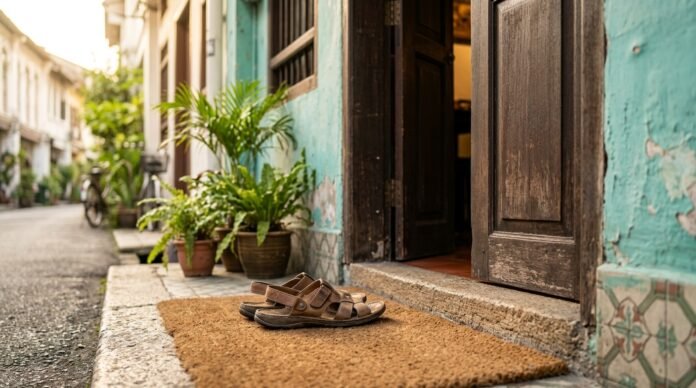

KL is welcoming and pretty relaxed, so you do not need to memorise a rulebook. But Malaysia is a multicultural, fairly conservative society, Malay-Muslim, Chinese, and Indian traditions all in one city, and a handful of small courtesies go a long way. Locals rarely correct you to your face, so getting these right is the difference between being tolerated and being genuinely welcomed. None of it is hard.
The short version
- Dress modestly at religious sites: cover shoulders and knees; women cover hair at mosques (robes are usually provided).
- Shoes off at homes, mosques, and temples, look for the pile of shoes at the door.
- Use your right hand for giving, receiving, and eating; the left is traditionally considered unclean.
- Keep PDA low-key, hand-holding is fine, more than that is frowned on, especially in conservative areas.
- During Ramadan, avoid eating or drinking openly in front of fasting Muslims in Muslim-majority areas.
Quick etiquette cheat sheet
| Situation | What to do |
|---|---|
| Mosque | Cover shoulders, knees, and hair (women); shoes off |
| Temple | Shoes off; modest dress; quiet |
| Greeting someone | Smile and slight nod; let opposite sex offer a handshake first |
| Giving or receiving | Use your right hand |
| Visiting a home | Shoes off at the door; a small gift is welcome |
| During Ramadan | Avoid eating or drinking openly near fasting people in daylight |
| Public affection | Hand-holding fine; keep the rest low-key |

At mosques and temples
KL’s mosques and temples are working places of worship, not just photo stops, so a little respect matters. Dress modestly: shoulders and knees covered for everyone, and women cover their hair at mosques. Most major mosques lend robes and headscarves to visitors at the entrance, so you do not need to come prepared, but do not rely on it at smaller ones. Remove your shoes before entering. At mosques, non-Muslims generally stay in the designated visitor areas and should not enter the prayer hall during active prayer, if unsure, just ask the person at the entrance, who will tell you kindly. At Hindu and Chinese temples, shoes come off too, keep your voice down, and do not touch statues or offerings unless invited.
Everyday body language
- The right hand. Hand over money, gifts, or food, and eat, with your right hand. The custom comes from traditional Islamic and broader regional practice, where the left hand is associated with bathroom hygiene and so kept away from eating and social contact. Locals notice the courtesy.
- The head is sacred. Do not pat anyone on the head, including children.
- Feet are lowly. Do not point your feet at people or at religious objects, and do not use a foot to point or move things.
- Greetings. A smile and slight nod always works. Handshakes are common, but let a member of the opposite sex offer first, some Muslims prefer not to shake hands across genders and will place their right hand on their chest instead, which you can mirror.
- Stay calm. Raising your voice or losing your temper in public is seen as a real loss of face, here, patience reads as strength.
Eating and the mamak
Food is the heart of KL life, and the mamak (the open-air Indian-Muslim eateries open late into the night) is where the whole city mixes. A few easy customs: many Malays and Indians eat rice dishes with the right hand, you are welcome to use cutlery, no one minds. Meals are often shared, family-style. If you are invited to someone’s home, a small gift is appreciated (avoid alcohol or anything pork-related for Muslim hosts), and shoes come off at the door. Alcohol is available but is for licensed bars and restaurants rather than the street; drink where locals drink.
Topics to tread lightly on
Malaysians are warm and chatty, but three subjects are genuinely sensitive: religion, race relations, and the royalty (the latter is legally protected, criticism can cross real lines). You can certainly discuss them if a local opens the door, but lead with curiosity rather than opinions, and do not wade in with strong takes. It is the one area where the relaxed surface has firmer rules underneath.
A few words go a long way
English is widely spoken, so you will be fine, but a couple of Malay phrases earn warm smiles: terima kasih (thank you), apa khabar? (how are you?), and selamat pagi (good morning). No one expects fluency; the effort is what registers.
Common mistakes tourists make
- Wearing revealing clothing to a mosque or temple (cover shoulders and knees).
- Forgetting to take shoes off, watch for the pile at the door.
- Eating or handing things over with the left hand.
- Speaking loudly in a place of worship.
- Assuming everyone is Muslim, KL is Malay, Chinese, and Indian, with several faiths.
- Joking about religion, race, or royalty, the three genuinely sensitive subjects.
Taking photos respectfully
KL is wonderfully photogenic, but a little courtesy goes a long way. Ask before photographing people up close, especially worshippers. In religious sites, look for signs, some prayer halls prohibit photography, and never photograph people mid-prayer or use flash during a ceremony. When in doubt, ask the person at the entrance; they will tell you what is fine.
If you are moving here, not just visiting
Visitors get a lot of latitude. Nobody expects a tourist to know the difference between Encik and Tuan, and small slips are forgiven on sight. Once you live and work here, that allowance quietly stops applying, and the things that matter shift away from temple dress codes towards how you address a colleague and what you do when your neighbour invites the whole floor over for Raya.
Names and titles at work
Use Encik for a man, Puan for a married or senior woman, and Cik for a younger or unmarried woman, until you are invited to drop them. First names alone on day one reads as presumptuous rather than friendly.
Conferred honours are the part newcomers get wrong. Tun, Tan Sri, Dato, Datuk and Datin are state or federal awards, and they replace Encik or Mr entirely rather than sitting alongside them. If someone holds one, use it. Dropping a title you knew about is a genuine discourtesy, not a stylistic choice, and it is noticed. If you are unsure, ask a colleague quietly before the meeting rather than guessing in the room.
Malay names also do not work like Western ones. In a name built with bin or binti, the part after it is the father’s name, not a family surname. So Ahmad bin Ismail is Encik Ahmad, never Encik Ismail. The same logic applies to Indian Malaysian names using a/l or a/p. Chinese Malaysian names usually put the family name first, so Lim Wei Ming is Mr Lim.
Meetings run more hierarchically than you expect
Seniority sets the order of the room. The most senior person tends to speak first and is addressed first, and contradicting them publicly, especially in front of their own staff, is expensive regardless of who happens to be right. Disagreement is usually handled afterwards and privately.
Communication leans indirect, because keeping the room comfortable is part of the job. I will try and we will consider it are frequently a polite no. Learning to hear that will save you a great deal of confusion in your first year, and treating it as evasiveness will not.
Business cards still matter. Offer and receive with both hands, read the card properly before putting it away, and do not write on it in front of the person who gave it to you.
The working week is not the same across Malaysia
KL runs Monday to Friday, with one wrinkle. Friday lunch is longer than usual because of Friday prayers, roughly the middle two hours of the day, so scheduling anything that needs Muslim colleagues in that window is a mistake you only make once.
The part almost no guide gets right is that the weekend itself varies by state. Kedah, Kelantan and Terengganu observe a Friday and Saturday weekend, which means Sunday is a normal working day there. Johor switched back to Saturday and Sunday from January 2025, and plenty of published sources still say otherwise. If you have colleagues, clients or factories in those states, your week and theirs only overlap for part of it, and the overlap is worth mapping before you promise a deadline.
Open houses, and what to bring
The open house is the single warmest thing about living here, and newcomers routinely underuse it. At Hari Raya, Chinese New Year, Deepavali and Christmas, colleagues and neighbours hold open houses and invite widely, often more widely than you expect. Turning up matters considerably more than what you bring.
Bring something small. At a Malay Muslim home, skip alcohol entirely and skip anything containing pork or gelatine, which rules out a surprising number of imported biscuits and sweets, so check the label or bring fruit. Shoes come off at the door in almost every home here regardless of the family’s background.
You will also see money given in small decorated packets, green at Raya and red at Chinese New Year, generally from married adults to children and unmarried younger people. As a guest you are not obliged to join in, but if you do, use crisp new notes and keep the amounts modest and even in number for Chinese New Year.
Race and religion once you live here
Visitors are told to avoid the subject. Residents cannot, because it comes up in ordinary conversation about schools, jobs and politics, and colleagues will raise it with you.
What holds up over years is straightforward. Listen more than you contribute, ask rather than assert, and do not generalise about a community you are not part of. Be aware too that public commentary here, social media posts included, can carry legal consequences that the same words would not carry at home. That is a reason for care in what you post, not a reason to avoid your neighbours.
If you are relocating rather than visiting, the KL expat guide covers the practical side, and renting an apartment in KL gets into the neighbour and condominium norms this section only touches.
Frequently asked questions
Can tourists wear shorts in Kuala Lumpur?
Yes, in the city generally, malls, streets, cafes, attractions, shorts are completely fine. The exception is religious sites, where you will need to cover shoulders and knees (robes are usually provided at mosques).
Can tourists drink alcohol in Malaysia?
Yes. Non-Muslims can buy and drink alcohol, and KL has plenty of licensed bars, restaurants, and shops. It is heavily taxed so it is not cheap, and it is for licensed venues rather than drinking on the street. Muslims are forbidden from drinking under local law.
Can non-Muslims visit mosques?
Yes, many KL mosques welcome non-Muslim visitors outside prayer times, with robes lent at the entrance. Stay in the designated visitor areas, dress modestly, remove your shoes, and avoid the prayer hall during active prayer. If unsure, ask at the entrance.
Is public affection allowed in Malaysia?
Hand-holding between couples is generally fine in urban areas, but anything beyond that is frowned upon, especially in more conservative or religious settings. Keep public displays of affection low-key.
What should I wear in Kuala Lumpur?
In the city day to day, normal warm-weather clothes are fine. At mosques and temples, cover shoulders and knees (and hair for women at mosques), robes are usually provided. Slightly more modest dress is appreciated in conservative or local neighbourhoods.
Do I need to take my shoes off?
Yes, at homes, mosques, and temples. The giveaway is a pile of shoes at the entrance. When in doubt, follow what everyone else is doing.
Is it rude to use my left hand?
For giving, receiving, and eating, yes, use your right hand. The left is traditionally considered unclean. It is a small thing locals quietly notice and appreciate.
How should I behave during Ramadan?
Non-Muslims are not expected to fast, but avoid eating, drinking, or smoking openly in front of fasting Muslims in Muslim-majority areas during daylight. Evenings come alive with Ramadan bazaars, which are wonderful to visit.
Explore more
- Is Kuala Lumpur safe for tourists?
- Chinatown & Petaling Street guide
- Kuala Lumpur food guide
- Kuala Lumpur travel guide
Official & useful resources

