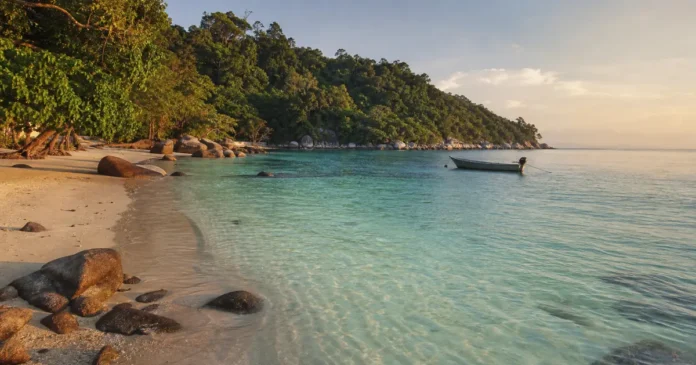

Here is the honest starting point: there is no genuinely beautiful beach within day trip range of Kuala Lumpur. KL sits inland on the Straits of Malacca side of the peninsula, and the nearest coast is shallow, silty and busy with shipping. If you want the postcard version of Malaysia, clear water and white sand, you are looking at a minimum of five hours of travel and realistically an overnight stay.
That is not a reason to skip the beaches. Malaysia has some of the best islands in Southeast Asia. It is a reason to pick the right one for the time you actually have, rather than driving ninety minutes to Port Dickson expecting Langkawi and being quietly disappointed.
Every beach option from KL, ranked by how far you have to go
Travel times are door to door from central KL and assume you are not fighting Friday traffic.
| Destination | Travel time | Water quality | Worth it? |
|---|---|---|---|
| Bagan Lalang, Sepang | 1 to 1.25 hrs | Murky, shallow | Only for a resort pool and a sunset |
| Port Dickson | 1.5 hrs | Murky, shallow | Fine for a weekend, not for a beach holiday |
| Pangkor | 4 to 5 hrs | Decent, not clear | Yes, if you have two nights |
| Langkawi | 1 hr flight | Good | Yes, the best all-rounder |
| Tioman | 6 hrs | Excellent | Yes, seasonal |
| Perhentian Islands | 6 to 10 hrs | Excellent | Yes, seasonal |
| Redang | 6 to 10 hrs | Excellent | Yes, seasonal |
Notice the gap in the middle. You go from ninety minutes to something mediocre, straight to five hours or a flight for something genuinely good. Nothing decent sits in between, and no amount of searching will change that. Plan around it.
The nearest coast, and what to expect
Port Dickson in Negeri Sembilan and Bagan Lalang in Sepang are the closest sea to KL. Both sit on the Straits of Malacca, which is one of the world’s busiest shipping lanes, shallow and heavy with river sediment. The water ranges from hazy green to brown, the sand is golden brown rather than white, and cargo ships are often visible on the horizon.
This is not a criticism so much as a description. Locals go for the sea air, the sunsets, which are excellent because you face due west, and the ease of getting there. What you are really buying is a resort pool with a sea view and a short drive. On those terms it works well.
If that suits your trip, our guide to beach resorts near Kuala Lumpur covers the properties, the fees that are not in the room rate and the tide timing in detail. The rest of this article is about the places worth a longer journey.
Pangkor, the nearest island worth the effort
Pangkor sits off the coast of Perak, reached by ferry from Lumut or Marina Island after a drive of roughly three to four hours from KL. The crossing itself is short, in the region of 10 to 40 minutes depending on which jetty you use, and one way tickets are cheap.
The beaches are a clear step up from the mainland coast without being spectacular. Teluk Nipah and Coral Bay are the usual picks. Water is greener and cleaner than Port Dickson, though still not the transparent turquoise of the east coast.
Who it suits: people with a spare weekend who want a real island without flying, and families who want somewhere low key. Who should skip it: anyone whose main goal is snorkelling or diving, since the east coast islands are in a different league for that.
Book transport ahead on public holidays, when the ferry queues get long. You can check bus and transfer options to Lumut on 12Go, and there is a reasonable spread of accommodation on the island itself, from simple chalets to a couple of resorts. Compare Pangkor stays on Booking.com or on Agoda before you commit, as quality varies a lot.
Langkawi, the best all-rounder
If you have three or four days and want the least friction between KL and a good beach, Langkawi is the answer. It is about an hour’s flight, served frequently by several airlines, and flights are often cheap if booked ahead.
Langkawi is an archipelago of 99 islands off the northwest coast, close to the Thai border. The main island has proper infrastructure: a wide spread of hotels at every price point, restaurants, a cable car, mangrove tours and duty free status that makes alcohol noticeably cheaper than the mainland.
Being honest about the water: it is good, not Maldives clear. Langkawi sits on the same western side of the peninsula, so visibility is moderate. Cenang is the busy main beach with the most amenities and the most crowds. Tanjung Rhu and the northern beaches are quieter and prettier.
The real advantage is reliability. Langkawi works year round. When the east coast islands are shut for the monsoon, Langkawi is often at its sunniest. If your dates are fixed and fall between November and February, this is very likely your best option. Check Langkawi hotel rates on Booking.com or on Agoda.
The east coast islands, where the good water is
Perhentian, Redang and Tioman are the islands people picture when they imagine Malaysian beaches. Clear water, coral close to shore, genuinely white sand. They are also the hardest to reach from KL and, for part of the year, impossible.
Perhentian Islands
Two main islands, Besar and Kecil, off the Terengganu coast. Kecil is the backpacker side with cheaper accommodation and more nightlife, Besar is quieter and slightly more comfortable. Excellent snorkelling straight off the beach, with turtles and reef sharks commonly seen.
Getting there takes effort. The fastest route is a flight from KL to Kota Bharu, around an hour, then roughly an hour by taxi or shuttle to Kuala Besut jetty, then a boat of 30 to 60 minutes. Realistically five to seven hours door to door if the connections line up. The budget alternative is an overnight bus from TBS to Kuala Besut, about nine to ten hours, then the boat.
Two practical warnings. Boats generally run between roughly 8am and 5pm, so a day bus arriving in the late afternoon means an unplanned night in Kuala Besut. And there are no ATMs on the islands. Bring more cash than you think you need.
Redang
The most resort-oriented of the three, and the one with the best underwater visibility, regularly in the 20 to 35 metre range during peak season. Accommodation skews towards mid-range and upmarket resorts selling full board packages rather than independent budget options.
Access is usually via Kuala Terengganu, either flying from KL or driving, then a boat from the Merang jetty. Many resorts bundle transfers into their packages, which is genuinely easier than assembling the journey yourself.
Who it suits: couples and families who want to arrive, unpack once and not think about logistics. Who should skip it: independent budget travellers, who will find Perhentian better value and more flexible.
Tioman
The closest of the three to KL in total travel time, at roughly six hours. Ferries run from Mersing in Johor, about four to five hours drive from KL, or from Tanjung Gemok in Pahang, which is closer at around three and a half hours.
Tioman is larger and more mountainous than the other two, with jungle interior as well as beaches, and villages spread around the coast rather than one concentrated resort strip. Diving is strong with a good range of sites and well-established dive centres. Duty free status makes it cheaper for alcohol.
Because the villages are spread out and connected mainly by sea taxi, decide where you want to be before booking. Moving between beaches is not as casual as it sounds.
The monsoon, and the mistake that ruins trips
This is the single most important thing on this page.
The east coast islands close from around November to February. Not reduced service, not off-season pricing. Closed. The northeast monsoon brings heavy seas to that coast, boats stop running, resorts shut and staff leave for the mainland. Flights to island airstrips are frequently cancelled in December and January.
Reopening is phased and roughly weather dependent. Most resorts on Perhentian, Redang and Tioman come back between late February and April, and the reliable season runs from March through October, with the best conditions generally April to September.
People book east coast islands for a December trip every year, and it does not work. If your dates fall in that window, go west instead. Langkawi, Penang and Pangkor are on the other side of the peninsula and are often at their driest and sunniest exactly when the east coast is unusable.
| When you are travelling | Go here |
|---|---|
| November to February | Langkawi, Pangkor, Penang |
| March to October | Perhentian, Redang, Tioman |
| April to September | Best conditions on the east coast |
| Any time, short trip | Langkawi |
Our guide to the best time to visit covers the wider seasonal picture, and the KL rainy season guide explains why the capital’s weather works differently from either coast.
Marine park fees and other costs
Perhentian, Redang and Tioman are protected marine parks, and there is a conservation fee payable at the jetty before you board. Foreign visitors pay more than Malaysians, and the amounts are modest, in the region of RM30 for a foreign adult and less for children, against a few ringgit for Malaysian citizens.
Rates and thresholds change, so treat that as indicative and confirm at the jetty. It is collected separately from your boat ticket, which catches people out who have spent their last cash on the ferry.
Budget more broadly for island travel than for city travel. Food and drink cost more on islands because everything arrives by boat, and the cheap street food economy of KL does not exist out there. Our KL trip cost guide sets the mainland baseline, and islands run noticeably above it.
What about Penang?
Penang comes up in beach searches, and it is worth setting expectations. Penang is an outstanding destination for food and heritage, and a fairly ordinary one for beaches. Batu Ferringhi, the main beach strip, has hotels and water sports but the water is unremarkable and jellyfish appear seasonally.
Go to Penang for George Town. If you get a beach afternoon out of it, treat that as a bonus rather than the reason for the trip.
Which should you actually pick?
- One night, want sea air: Port Dickson or Bagan Lalang. Manage your expectations and enjoy the pool.
- A weekend, no flying: Pangkor.
- Three or four days, want it easy: Langkawi. Works year round.
- Snorkelling or diving is the point: Perhentian, Redang or Tioman, between March and October only.
- Travelling November to February: west coast, no exceptions.
- Backpacking on a budget: Perhentian Kecil.
- Want to unpack once and do nothing: Redang, on a package.
If none of that fits the time you have, the honest answer is to skip the beach entirely and spend the days on things KL does well. Our day trips from Kuala Lumpur guide has options that genuinely work in a day, which no real beach does.
Official & useful resources
Frequently asked questions
Is there a beach near Kuala Lumpur?
The nearest are Bagan Lalang in Sepang, about an hour away, and Port Dickson, about ninety minutes. Both sit on the Straits of Malacca, so the water is shallow and murky rather than clear. They work as a short break with a resort pool, but they are not beach holiday destinations.
Which is the best island in Malaysia?
It depends on timing and what you want. Langkawi is the best all-rounder because it is easy to reach and open year round. Redang has the clearest water, Perhentian is best for budget travellers and easy snorkelling, and Tioman is closest to KL by land and strongest for varied diving.
When do the east coast islands close?
Roughly November to February, because of the northeast monsoon. Boats stop running and most resorts shut completely. Reopening is phased between late February and April, and the reliable season runs March to October with the best conditions from April to September.
Can you do a beach day trip from Kuala Lumpur?
You can drive to Port Dickson or Bagan Lalang and back in a day, but you would spend three hours in the car for a mediocre beach. Every beach genuinely worth seeing needs at least one night, and most need two or three.
How do I get from Kuala Lumpur to the Perhentian Islands?
Fastest is a flight to Kota Bharu, around an hour, then roughly an hour by road to Kuala Besut jetty, then a boat of 30 to 60 minutes. Cheapest is an overnight bus from TBS to Kuala Besut, about nine to ten hours, then the boat. Boats run only during daylight hours, so time your arrival accordingly.
Are there ATMs on the Malaysian islands?
Not on the Perhentians, and facilities are limited on the smaller islands generally. Withdraw cash on the mainland before you cross. Larger destinations such as Langkawi and Tioman have banking facilities, but do not assume card payment is accepted everywhere.

