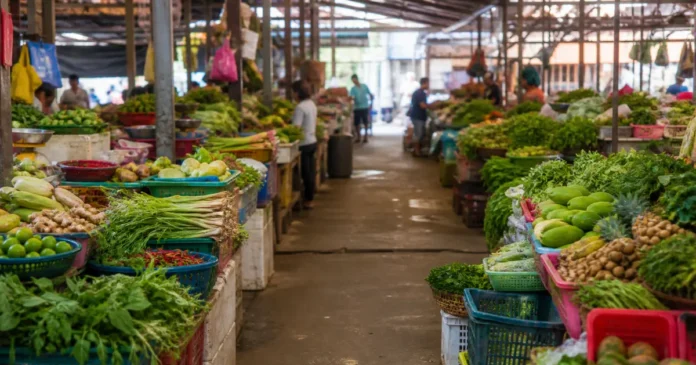

Taman Tun Dr Ismail, universally shortened to TTDI, is a leafy suburb about twenty minutes northwest of the city centre. It has no towers, no nightlife district and nothing that would count as a sight. It is also one of the few places in KL where a visitor can spend a morning doing exactly what residents do, which is a rarer experience here than it sounds.
It is on the MRT, which matters more than any other single fact about the place.
The short version
- TTDI is a residential suburb, not an attraction. Come for a morning, not a day.
- The wet market is the reason to make the trip, and it is a short walk from the MRT station.
- The market is reported to close on Mondays, so check before you travel.
- Taman Rimba Kiara, the park on the edge of the suburb, exists today because residents sued the city and won.
- Direct MRT access on the Kajang Line makes this one of the easiest local neighbourhoods to reach without a car.
The vibe
Low rise, green and unhurried. Terraced houses and bungalows on wide streets, mature trees, and a compact commercial strip where the same coffee shops have been serving the same customers for decades. There is a strong sense that people here know each other.
The contrast with the newer expat areas is sharp. Where the high rise districts are built around condominium facilities and malls, TTDI is built around a market, a park and a row of shops. It is more Malaysian and less international, and it draws a mix of long term residents, families and a smaller expat population that specifically wanted a suburb rather than a tower.
The honest limitation is that not much happens here. There is no bar strip, the shops close early by KL standards, and after dark the area is quiet. That is the point for residents and a drawback for anyone hoping to fill an evening.
Where is TTDI?
Northwest of central KL, bordering Damansara and sitting below the Bukit Kiara forest reserve. It is close to Mont Kiara and Bangsar without feeling like either.
The suburb is small and easy to understand. A main commercial road runs through the middle, the market sits near the southern edge by the MRT station, and the residential streets fan out behind. Everything a visitor would want is within a fifteen minute walk of the station, which is not something you can say about most KL neighbourhoods.
The market, and why it is worth the trip
Pasar Besar TTDI is the anchor of the neighbourhood and the single best reason for a visitor to come.
It is a multi storey covered market, and it is noticeably drier and better kept than the term wet market usually implies, which makes it an easier first market for anyone who has found others in KL overwhelming. Produce fills the lower level, and there are cooked food stalls upstairs doing the standard Malaysian breakfast repertoire, roti canai, nasi lemak and noodles, at prices set for people buying groceries rather than for tourists.
Go early. Wet markets across KL run on the morning, and this one is busiest and best stocked from around seven. By late morning stalls begin packing up, and arriving at midday means seeing the tail end of it.
Check the day before you travel. The market is widely reported to close on Mondays and to run from early morning into the early afternoon on other days. Hours at markets like this drift, and nothing is more deflating than a half hour journey to a shuttered building, so confirm current times rather than trusting any guide including this one.
There is also a night market in TTDI on Sunday evenings, the standard Malaysian pasar malam of street food, produce and household goods. It is aimed squarely at residents, which is exactly what makes it worth seeing.
Taman Rimba Kiara, the park the residents went to court for
On the edge of TTDI is a green space that tells you more about this neighbourhood than any description of the cafes could.
In 2017 the TTDI residents association filed for judicial review to overturn a development order Kuala Lumpur City Hall had issued for a project on the park land. They lost at the High Court in 2018. They appealed and won at the Court of Appeal in 2021. City Hall and the developer took it further, and in April 2023 the Federal Court, the highest court in Malaysia, upheld the decision and quashed the development order, finding that City Hall had acted unlawfully. The fight ran for roughly seven years.
Walking there now, it is an ordinary suburban park with trees, paths and people exercising in the morning. It is worth knowing that it is ordinary because a group of residents spent seven years and a great deal of money making sure it stayed that way. That civic streak is the defining feature of TTDI, and it explains the character of the place better than anything else on this page.
The story is not entirely a happy one. A longhouse community has lived on part of the same site for decades, having been promised permanent housing more than forty years ago, and that promise remains unresolved. The court case protected the park. It did not settle what happens to the people living on it.
Beyond the park, TTDI sits at the foot of the Bukit Kiara forest reserve, which has walking and running trails used heavily by locals in the early morning. Go at dawn if you go at all, because it gets hot and crowded quickly.
Getting there and around
Easy, which sets TTDI apart from most of KL’s residential suburbs.
Taman Tun Dr Ismail station sits on the MRT Kajang Line and opened in December 2016. From the city centre it is a direct ride with no changes, and the journey is predictable in a way that driving here is not. The station is on Jalan Damansara at the southern edge of the suburb.
There is a small detail worth knowing, because it explains the layout. The station was originally planned for a different spot, and objections during planning moved it a few hundred metres to sit beside the wet market. The result is that the main reason to visit is a short walk from the platform, which is unusually convenient by KL standards.
If you have been comparing neighbourhoods, this is the practical difference between TTDI and the newer expat districts. Mont Kiara, for instance, has no rail station at all and depends entirely on cars and Grab. TTDI can be done as a morning trip on public transport without any planning.
Once here, walk. The commercial area is compact, the market and the shops are close together, and the residential streets are pleasant and shaded. Driving in is possible but parking around the market is competitive on weekend mornings, which is precisely when you want to be there.
Where to stay in TTDI
Short answer, do not. There is very little visitor accommodation here, and that is a fair reflection of demand rather than an oversight. TTDI is a place to spend a morning, not a base.
Stay central and travel out. From Bukit Bintang or KLCC the MRT gets you here easily, and you keep the evening options that TTDI does not have. If you specifically want a quieter residential base with better transport links than most, Bangsar is the more practical choice and has actual places to stay.
For anyone looking at TTDI as somewhere to live rather than visit, it comes up regularly as a quieter alternative to the high rise districts, and our comparison of the best expat areas in KL covers how it stacks up. Costs across the city are broken down in our cost of living guide.
What it costs to live here
TTDI sits below Mont Kiara and roughly level with the better parts of Petaling Jaya, which is a large part of its appeal to people who have looked at both.
For comparison as of August 2026: furnished two and three bedroom units in Mont Kiara commonly ask RM3,000 to RM6,000 a month, Sri Hartamas listings average nearer RM2,000, and a two bedroom in Petaling Jaya runs RM1,800 to RM3,200. TTDI generally lands in the upper half of that PJ range, with the older low rise stock cheaper than the newer towers near the MRT.
What separates it from PJ at a similar price is the MRT station, which neither Mont Kiara nor Sri Hartamas has at all. That is the practical argument for the area and it is worth more than the price difference to anyone commuting into the city.
TTDI at a glance
| TTDI | |
|---|---|
| Best for | A quiet residential base with real neighbourhood life |
| Worst for | First visits, sightseeing every day, nightlife |
| Rail access | TTDI MRT, on the Kajang line |
| Getting to the centre | About 20 to 25 minutes by MRT to Bukit Bintang |
| The draw | The Sunday pasar malam and Taman Rimba Kiara |
| Visitor accommodation | Limited, mostly serviced apartments |
The rail connection is what separates TTDI from Mont Kiara next door. TTDI has a station and Mont Kiara does not, and for anyone without a car that single fact decides between them.
TTDI vs Bangsar
Both are leafy, low rise and on rail, so they get compared often.
Bangsar is livelier, more international, has a real cafe and bar scene, and gives a visitor more to do across a full day and evening. TTDI is quieter, more residential, more Malaysian in feel, and better for a morning built around a market.
For most visitors on a short trip, Bangsar is the better use of an afternoon. TTDI is the better choice if you want to see how an ordinary KL suburb actually works, or if you are travelling with an interest in food markets. They pair well on the same day if you have the time, since both sit on the same side of the city.
Who it suits, and who should look elsewhere
Come to TTDI if you like markets and want to eat breakfast where residents eat it, you are on a longer trip and have run out of obvious things to see, you want a walkable morning without organising transport, or you are weighing up KL neighbourhoods with a move in mind.
Skip it if you have three days in KL and have not yet seen the main sights, you are looking for nightlife or shopping, or you cannot get here before mid morning. A late arrival means a closed market and a quiet suburb with nothing much to offer, which is a wasted trip rather than a bad neighbourhood.
The best version of a TTDI visit is simple. Take the MRT out early, eat at the market, walk it off in the park, and be back in the city by lunchtime.
Frequently asked questions
What does TTDI stand for?
Taman Tun Dr Ismail, a residential suburb in northwest Kuala Lumpur named after Malaysia’s second deputy prime minister. Almost nobody uses the full name in conversation.
Is TTDI worth visiting for tourists?
For a morning, yes, particularly for the market. It is not worth a full day and it has no conventional attractions. Best suited to visitors on longer trips who want to see a residential side of KL.
How do I get to TTDI from KLCC?
Take the MRT Kajang Line to Taman Tun Dr Ismail station. It is a direct ride from the city centre with no changes, and the station is a short walk from the market. Grab works too but the train is more predictable in traffic.
When is the TTDI market open?
Mornings are the time to go, from around seven, and it is widely reported to close on Mondays. Hours change, so confirm current times before making the trip. A separate night market runs on Sunday evenings.
Explore more
- KL neighbourhoods guide, how the whole city fits together
- Bangsar guide, the livelier neighbour
- Bukit Bintang guide, where most visitors base themselves
- Best expat areas in KL, if you are choosing somewhere to live
- Cost of living in Kuala Lumpur, what a month here actually costs

