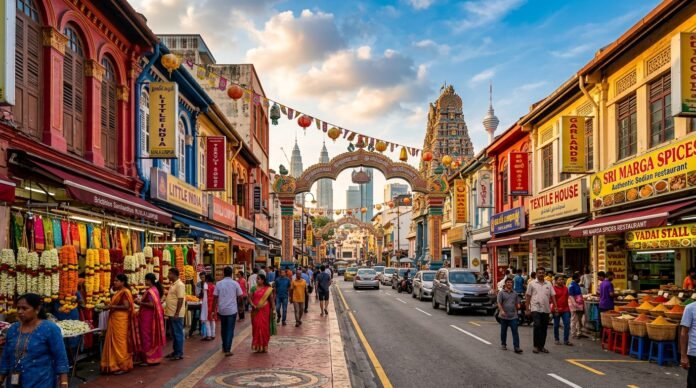

Brickfields is Kuala Lumpur’s Little India, and it’s one of the most colourful, sensory corners of the city. Step off the train at KL Sentral, cross the road, and you’re suddenly among garlands of jasmine, the smell of spices and frying dosa, Bollywood music from the shops, and temple gopurams rising over the street. It’s the banana leaf rice capital of KL and a genuinely multi-faith neighbourhood, with Hindu temples, a Buddhist vihara, churches and a mosque all within a short walk.
This guide covers the food you shouldn’t miss, the temples and street life, when to visit for festivals, and how to make the most of a wander through the district.
Some links in this post are affiliate links. If you book through them, I earn a small commission at no extra cost to you. Thanks for supporting the blog.
The short version
- What it is: KL’s Little India, a historic Indian, largely Tamil, neighbourhood right beside KL Sentral.
- Best for: Indian food, especially banana leaf rice, temples, culture and festival atmosphere.
- The food: the best concentration of South Indian and Sri Lankan food in the city, much of it cheap and excellent.
- The culture: Hindu temples, a Buddhist vihara, churches and a mosque side by side, plus colourful arches and murals.
- Festivals: spectacular at Deepavali and Thaipusam.
- Time needed: a meal and a wander, or half a day with the temples.
The vibe
The heart of Brickfields is Jalan Tun Sambanthan, strung with bright arches and lined with sari shops, gold jewellers, spice traders, sweet stalls and restaurants. It’s busy, loud and wonderfully sensory, garlands of flowers for sale, incense and curry in the air, Tamil and Bollywood music spilling from doorways. It isn’t polished or manicured, and that’s exactly the point: this is a living, working neighbourhood, a little gritty and chaotic, and all the more authentic for it. Come hungry and curious.
The food: KL’s banana leaf rice capital
If you eat one meal in Brickfields, make it banana leaf rice. A fresh banana leaf is laid down as your plate, then piled with rice, a few vegetable curries, dhal, pickles, papadum and rasam, with meat, fish or extra sides added for a little more. It’s cheap, generous and delicious, and refills of rice and vegetables are usually free. Eat with your right hand if you can, and here’s the local custom: when you’re done, fold the leaf toward you to signal you enjoyed the meal.
Where to eat:
- Vishal Food & Catering (Jalan Scott), the most famous banana leaf rice in Brickfields, Chettinad and South Indian, with fiery curries and communal tables. It packs out at lunch for good reason.
- Saravanaa Bhavan (Jalan Tun Sambanthan), a dependable South Indian vegetarian spot, ideal for a dosa, idli or vada breakfast.
- Annalakshmi, a much-loved vegetarian restaurant run on a pay-as-you-wish basis, a Brickfields institution with a charitable spirit.
- Restoran Chat Masala and Moorthy’s, more excellent banana leaf and mixed Indian options if the big names are full.
- The pisang goreng stall near YMCA, for freshly fried banana fritters from a long-running street vendor.
- Sweet shops along the main street, for Indian mithai, and any coffee shop for a frothy teh tarik.
Timing tip: Brickfields is busiest and best around lunchtime, when the banana leaf places fill with local office workers, so aim to arrive a little before or after the 1pm rush for a table. For the wider food scene, see our KL food guide and best Malaysian dishes.
Where to eat, and what it costs
The reason to come. Prices as of September 2026, and this is the cheapest good eating in central Kuala Lumpur.
Annalakshmi
The one worth knowing about even if you are not vegetarian. South Indian, run by volunteers, and operating on a pay as you feel basis with no price list at all. You eat from the buffet and give what you think it was worth on the way out. It has been an institution here for decades, the food is properly good rather than charitable, and the hours are limited compared with a commercial restaurant, so check before going.
Kanna Curry House
On Jalan Scott and serving banana leaf since 1976. The basic vegetarian banana leaf has been advertised around RM6.60 before tax, which is roughly RM7 in your hand for as much as you can eat, since rice, vegetables and curry are refilled free.
Vishal Food and Catering
The plainer option a short walk away, rice with three sides listed around RM6.80. Nothing about the room is designed, which is the point.
What to budget
A vegetarian banana leaf meal runs about RM8 to RM14 with unlimited refills. Adding fried chicken or mutton takes it to roughly RM15 to RM25. Fish head curry is the expensive item, usually RM40 upwards and priced for sharing. Thosai with chutney at a mamak is under RM6.
The refills are free and included, which visitors routinely do not realise. Servers circle the room offering more rice and vegetables, and many first timers politely decline assuming it will appear on the bill. It will not, and that is the whole reason banana leaf rice is such good value.
Temples and the street of harmony
One of the most striking things about Brickfields is how many faiths sit side by side within a few streets, Hindu temples, a Buddhist vihara, churches, a mosque and Chinese temples, all within a short walk. It’s a lovely example of Malaysia’s mix, and it makes for a rewarding wander.
- Sri Kandaswamy Kovil is the star, a beautiful Hindu temple dating to 1902, built by the Ceylon Tamil community with a towering, sculpture-covered gopuram carved by Jaffna artisans. It’s dedicated to Lord Murugan, and it’s a national heritage site. Come Thaipusam, this temple dispatches Kuala Lumpur’s famous silver chariot on its procession to Batu Caves.
- Buddhist Maha Vihara, established by the Sinhalese community in the late 19th century, offers a calm, reflective contrast, with shrines, resident monks and a highlight celebration at Wesak.
- Churches, a mosque and Chinese temples, including the Tamil Methodist Church, the Church of Our Lady of Fatima, a neighbourhood mosque and nearby Chinese temples, all within strolling distance, giving Brickfields its reputation as a street of harmony.
Dress modestly to enter the temples, remove your shoes, and be quiet and respectful around worshippers. Our cultural etiquette guide has more. The photogenic hilltop Thean Hou Temple is also close by.
Shopping and street life
Even if you’re not buying, the shops are part of the experience. Along and around Jalan Tun Sambanthan you’ll find:
- Sari and textile shops, walls of vivid silks and cottons.
- Gold and jewellery stores, a Little India staple.
- Spice and grocery shops, sacks of spices, lentils and rice, and Indian snacks to take home.
- Flower garland stalls, stringing jasmine and marigold for temple offerings.
- The colourful arches and murals that mark the district, good for photos.
Festivals: when Brickfields comes alive
Time your visit to a festival and Brickfields is transformed, though be ready for big crowds.
- Deepavali, the festival of lights, is the biggest, usually October or November. The streets are strung with lights and decorations, a festive bazaar pops up, and the whole area buzzes.
- Thaipusam, in late January or early February, when Sri Kandaswamy Kovil sends its silver chariot in procession toward Batu Caves, an extraordinary sight.
- Wesak, marking Buddha’s birthday, centred on the Buddhist Maha Vihara, with a candle-lit procession.
- Ponggal, the Tamil harvest festival in January, celebrated with food and colour.
Dates shift with the lunar and Tamil calendars, so check the year’s timing if you want to plan around one. See our best time to visit KL guide.
Best time to visit
- Lunchtime for the food and the buzz, when the banana leaf restaurants are in full swing.
- Late afternoon and early evening for cooler temperatures and a lively street scene as the shops light up.
- Festival season (Deepavali, Thaipusam) for the spectacle, if you don’t mind crowds.
- Mornings are calmer and cooler if you prefer to explore the temples in peace.
Where to stay
Brickfields is a food, culture and transit area rather than a hotel district, so most visitors don’t stay in Brickfields itself. The smart move is to stay next door at KL Sentral, which puts you a short walk from Little India and connected to the airport and the whole rail network. See our KL Sentral area guide and the best hotels near KL Sentral. If you’d like the area’s food and culture explained as you go, a Little India food walking tour is a good option.
Getting there
It couldn’t be easier. Brickfields sits right beside KL Sentral, so you can walk across from the station in a few minutes. The Tun Sambanthan monorail station is in the heart of Little India, and a Grab drops you on the main street. Our rail guide covers the network.
Is it worth it? An honest take
For food and culture lovers, absolutely. Brickfields serves some of the best and best-value Indian food in the city, the temples are genuinely beautiful, and the multi-faith street life is a window into everyday multicultural Malaysia. A meal and a wander here is one of the more rewarding, authentic couple of hours in KL.
Just know what you’re getting: it’s bustling, crowded and a little rough around the edges, not a tidy, manicured tourist zone. That rawness is the appeal for many, but if you prefer calm and polish it may feel overwhelming. Come for the food first, take your time with the temples, and it more than earns a visit.
Frequently asked questions
What is Brickfields known for?
Brickfields is Kuala Lumpur’s Little India, known above all for its Indian food, especially banana leaf rice, and for its vibrant, multicultural street life. It’s also home to beautiful temples like Sri Kandaswamy Kovil, a Buddhist vihara, churches and a mosque all close together, and it comes alive during festivals such as Deepavali and Thaipusam.
Where can I get the best banana leaf rice in Brickfields?
Vishal Food & Catering on Jalan Scott is the most famous, serving Chettinad and South Indian banana leaf rice with fiery curries and communal seating. It gets busy at lunch. Other good options include Saravanaa Bhavan for vegetarian South Indian, Annalakshmi, and Restoran Chat Masala. Prices are low and refills of rice and vegetables are usually free.
Is Brickfields worth visiting?
Yes, especially for food and culture. It offers some of the best and most affordable Indian food in KL, genuinely beautiful temples, and an authentic, multicultural atmosphere right next to KL Sentral. It’s bustling and a little gritty rather than polished, which is part of its charm. A meal and a wander is a rewarding couple of hours.
How do I get to Brickfields?
Brickfields is right next to KL Sentral, so you can simply walk across from the station in a few minutes. The Tun Sambanthan monorail station sits in the middle of Little India, and a Grab drops you on the main street. Thanks to KL Sentral, it’s also directly connected to the airport and every rail line in the city.
When is the best time to visit Brickfields?
Lunchtime is best for the food and buzz, while late afternoon and evening bring cooler air and a lively, lit-up street scene. For spectacle, visit during Deepavali (around October or November) or Thaipusam (late January or early February), when the streets are decorated and packed. Mornings are quieter for visiting the temples in peace.
Is Brickfields the same as KL Sentral?
They’re right next to each other but different. KL Sentral is the modern transport hub with hotels and a mall, while Brickfields is the historic Little India neighbourhood beside it, full of Indian food, temples and culture. Most travellers stay at KL Sentral and walk over to Brickfields to eat and explore.

