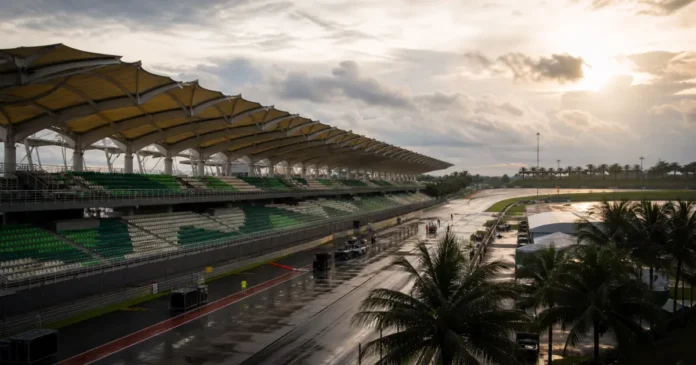

Formula 1 is racing in Malaysia in October 2026, at Sepang, for the first time since 2017. The race is called the Bahrain Grand Prix.
That is not a mistake, and it causes a lot of confusion when people go looking for tickets or try to work out whether the Malaysian Grand Prix is back. Here is what is actually happening.
The short version
- The event is officially the Formula 1 Gulf Air Bahrain Grand Prix, held at Sepang International Circuit in Malaysia.
- It runs from 2 to 4 October 2026, as round 16, between Azerbaijan and Singapore.
- Bahrain’s own race was cancelled because of continued conflict in the Middle East. Bahrain is funding this one and keeping the name.
- This is not the return of the Malaysian Grand Prix as a permanent fixture. It is a one off arrangement for 2026.
- Search for Bahrain Grand Prix rather than Malaysian Grand Prix when looking for official information.
What happened
The 2026 season was due to include races in Bahrain and Saudi Arabia in April. Continued conflict in the Middle East led to those being cancelled.
Formula 1 wanted to reinstate the Bahrain race rather than simply lose it from the calendar. With the situation unresolved, running it in Bahrain was not possible, so an agreement was reached between Formula 1, the FIA, the government of Bahrain and the government of Malaysia to stage the event at Sepang instead.
Bahrain is funding the race and retains the naming rights, which is why the event keeps the Bahrain Grand Prix title despite being held roughly six thousand kilometres away. Formula 1 has described it as preserving a grand prix that would otherwise not have happened.
Why Sepang
Sepang was a straightforward choice for a replacement at short notice. It hosted Formula 1 from 1999 to 2017, so the circuit is a known quantity with the grade of licence, the pit and paddock facilities and the grandstand capacity already in place. It also continues to host international motorsport, so the operational experience did not disappear when F1 left.
The calendar slot helps too. Placing the race between Azerbaijan and Singapore groups it with the existing Asian leg, which limits the additional freight and travel burden on teams already stretched by a long season.
Early October is also the slot the Malaysian Grand Prix used in its final years, so the timing is familiar territory rather than an experiment.
If you are actually going, the logistics are covered separately in our guides to where to stay for a Sepang race weekend and getting around Kuala Lumpur.
Practical consequences of the name
This is where the confusion actually costs people something.
Searching for the wrong thing. Official pages, ticketing and team communications refer to the Bahrain Grand Prix. Searching for the Malaysian Grand Prix will surface a lot of archive material from before 2018 and a lot of speculation, and can send you to resellers listing the wrong event entirely. Use the official name.
Booking the wrong destination. It sounds unlikely, but travel packages and ticket listings that reference Bahrain by name have caused genuine mix ups. Check that any package explicitly says Sepang or Malaysia before paying.
Entry requirements are Malaysia’s, not Bahrain’s. You are travelling to Malaysia, so Malaysian immigration rules apply, including the digital arrival card requirement for most arrivals. Check the current rules for your passport with Malaysian immigration before you book flights.
Is the Malaysian Grand Prix coming back for good?
Nothing announced suggests so, and it is worth being clear about that rather than optimistic.
The 2026 event is a solution to a specific problem in a specific year. Malaysia left the calendar after 2017 for reasons that were largely financial, with the hosting fee difficult to justify against declining ticket sales, and none of that has obviously changed.
A well attended race would strengthen any future argument, and there has been no shortage of local enthusiasm about the return. But treat 2026 as a one off unless and until something further is confirmed. If you have been waiting for F1 to come back to Malaysia, this is the year to go rather than the first of many.
Frequently asked questions
Is the Malaysian Grand Prix back in 2026?
Formula 1 is racing in Malaysia in 2026, but the event is titled the Bahrain Grand Prix rather than the Malaysian Grand Prix. It is a one off arrangement for this season, not a confirmed permanent return.
Why is the Bahrain Grand Prix in Malaysia?
Bahrain’s April race was cancelled because of continued conflict in the Middle East. Rather than lose the event, Formula 1, the FIA and the governments of Bahrain and Malaysia agreed to stage it at Sepang. Bahrain funds the race and keeps the name.
When is the 2026 F1 race at Sepang?
2 to 4 October 2026, with practice on Friday, qualifying on Saturday and the race on Sunday. It is round 16, between Azerbaijan and Singapore.
When did F1 last race in Malaysia?
2017. Sepang hosted the Malaysian Grand Prix from 1999 until then, when the race was dropped from the calendar.
Explore more
- The Kuala Lumpur travel guide, if you are planning the trip
- KLIA to KL city, getting in from the airport
- KL rainy season, what to expect from early October weather
Details on this race were still being confirmed when this was written in August 2026. Formula 1 and Sepang International Circuit are the authoritative sources for schedules and ticketing.
Why Malaysia dropped off the calendar in 2017
Worth understanding, because it explains why a permanent return is not straightforward.
Sepang hosted the Malaysian Grand Prix from 1999, and the circuit was built specifically to bring Formula 1 to the country. The problem that emerged over the following two decades was arithmetic. Hosting fees rose steadily while attendance did not, and the race was competing for the same regional audience as Singapore, which had arrived in 2008 with a night race in the middle of a city and taken much of the attention.
By the mid 2010s the event was difficult to justify commercially, and Malaysia chose not to renew after 2017. Sepang did not close. It continued hosting MotoGP and other international motorsport, which is precisely why the facility was in a fit state to take a Formula 1 race at short notice nine years later.
None of the underlying economics has obviously changed. The 2026 race exists because Bahrain is funding it, not because the hosting problem was solved. That is the honest reason to treat this as a single opportunity rather than the start of something.
One thing does work in Malaysia’s favour. MotoGP is confirmed at Sepang annually through 2031, so the circuit has a secure future in international motorsport regardless of what Formula 1 does next.
What the 2026 rule changes mean for this race
There is a second reason 2026 is an unusual year to see a grand prix, unrelated to where it is being held.
Formula 1 introduced its largest technical reset in years this season. Cars are narrower and around 30kg lighter, the electrical component of the power unit rose from 120kW to 350kW for a roughly even split with combustion, and the sport moved to sustainable fuel. Active aerodynamics arrived, and DRS was replaced by an overtake mode available to every driver.
Reset years tend to spread the field, because teams solve a new rulebook at different speeds. For anyone attending, that usually means less predictable racing than a settled season produces. Sepang is also a good circuit to judge the new rules on, with two long straights ending in heavy braking zones.

