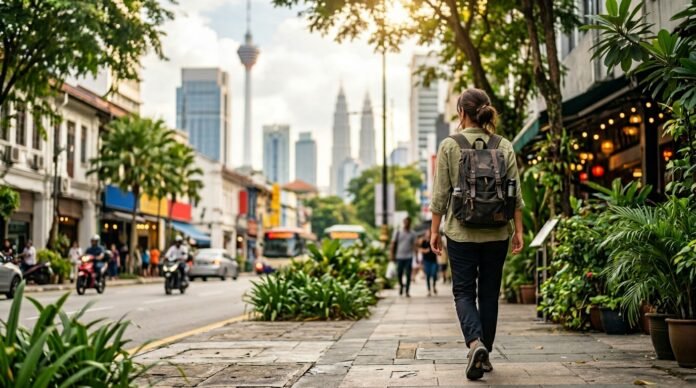

The honest answer: Kuala Lumpur is one of the easier big Asian cities to travel solo as a woman. It is modern, English is widely spoken, and the main risks are about money (overcharging, petty theft), not personal danger. That does not mean switch your brain off, but it does mean you can relax more here than the worried Googling suggests. Here is the practical picture.
The short version
- Generally safe. Serious harassment is uncommon in central areas; the usual annoyances are petty theft and the occasional catcall.
- Use Grab or the train instead of street taxis, it removes the most common hassle (overcharging) in one move.
- Central, well-lit areas (KLCC, Bukit Bintang, Bangsar) are fine day and night; quiet backstreets and some older districts feel less comfortable late.
- Dress is relaxed in most of the city; cover shoulders and knees at mosques and temples.
- Trains have women-only coaches (pink signage) if you prefer them at busy times.
How safe is it, really?
By the standards of solo female travel, KL sits comfortably in the “relaxed but aware” category, not the “constantly on guard” one. Plenty of solo women report men here being more likely to keep a polite distance than to bother them, and violent crime against tourists is rare. What does happen is ordinary city stuff: pickpocketing in crowds, the odd catcall, and taxi drivers trying it on with fares. None of that is unique to KL, and all of it is manageable. The realistic mindset is the same as any large city: confident, aware, not anxious.
For the wider safety picture (emergency numbers, scams, areas), see our full guide on whether Kuala Lumpur is safe for tourists.
What actually happens (and what doesn’t)
It helps to be specific about the real risks rather than a vague “be careful”. The things visitors most commonly report are property crimes, not violent ones: pickpocketing in crowded markets and on busy transport, the occasional phone or bag snatch by a passing motorbike, taxi overcharging, and losing track of belongings after a night out. Serious assaults against tourists are uncommon, particularly in the central districts where you will spend your time. Knowing that the realistic worry is your phone and wallet, not your safety, is exactly what lets you relax and just take sensible precautions.
Getting around safely
This is where most of your “safety” decisions actually live, and it is easy:
- Grab over street taxis. The fare is fixed and shown up front, the driver and plate are in the app, and there is a record of your trip. Check the plate matches before getting in. See our Grab guide.
- The MRT, LRT and Monorail are clean, busy, well-monitored, and have women-only coaches. A genuinely comfortable way to move around, see the rail guide.
- At night, a Grab door-to-door is cheap and easy, the better call than walking quiet streets late or waiting at empty stops.
Where to stay and walk
Base yourself somewhere central and well-connected and the whole trip gets easier. KLCC, Bukit Bintang, and Bangsar are popular, walkable, and lively into the evening. These areas are fine to walk in at night on the main, busy streets. Where the atmosphere shifts is the quiet stuff, dim backstreets, empty late-night corners, and some of the older districts after the crowds thin out, where, as in any city, you would rather call a Grab than wander. The rule is simple: stick to well-lit, populated streets after dark, and bridge the gaps with a five-ringgit Grab.
How the main central areas feel for a solo woman:
- KLCC, modern, well-lit, security everywhere; one of the most comfortable bases.
- Bukit Bintang, busy and central with lots of nightlife; very lively, just keep an eye on your belongings in the crowds.
- Bangsar, relaxed, expat-favoured, great cafes and restaurants; easygoing and pleasant.
- Chinatown, characterful and fine by day; just a bit more awareness on the quieter streets at night.
- Brickfields (Little India), handy for KL Sentral and transport; busy by day, less appealing to wander late.
Choosing a hotel
If you are picking where to stay, a few things make solo life easier: somewhere within a short walk of an MRT or Monorail station, a place with strong recent reviews and 24-hour reception, well-lit surroundings, and food within walking distance so you are not reliant on a late-night trip out. Get those and the rest takes care of itself. For a fuller breakdown of the areas, see our guide to the best areas in KL and the neighbourhoods guide.
What to wear
Malaysia is multicultural, and KL is fairly relaxed, you will see the full range from shorts to full coverage. Day to day in the malls, cafes, and tourist areas you can dress as you would in any warm city. The one place to adjust is religious sites: at mosques (and out of respect at some temples) cover your shoulders and knees, and mosques usually lend a robe and headscarf to visitors. Outside religious settings, modest-ish dress simply attracts a little less attention in the more conservative or local neighbourhoods, it is about comfort, not rules.
Practical habits that help
- Keep valuables close in crowds and on busy transport; petty theft is the most likely issue you’ll face.
- Use ATMs inside malls or banks rather than isolated street machines.
- Share your live location with someone you trust (Grab and WhatsApp both make this easy) when out late.
- Keep a digital copy of your passport and key documents.
- If a catcall happens, it is almost always just noise, ignore it and keep walking; it rarely escalates.
- Save the emergency number 999 (or 112 from a mobile). Tourist Police are stationed around Bukit Bintang, KLCC, and Chinatown.
Emergency numbers and help
Worth saving before you need them:
- 999, the all-purpose emergency number (police, ambulance, fire).
- 112, works from a mobile, including with no SIM or no credit.
- Tourist Police, stationed around the main visitor areas including Bukit Bintang, KLCC, and Chinatown, useful for lost property, reports, and help in English.
Keeping mobile data on (an eSIM or local SIM) matters more than it sounds: it keeps Grab, Google Maps, and messaging working, which is most of your practical safety net. See our best eSIM guide.
Frequently asked questions
Is Kuala Lumpur safe for solo female travelers?
Yes, generally. It is one of the easier major Asian cities for solo women: English is widely spoken, serious harassment is uncommon in central areas, and the main risks are petty theft and taxi overcharging rather than personal danger. Normal city awareness is enough.
Is it safe to walk around KL at night as a woman?
On the main, busy, well-lit streets of central areas like KLCC, Bukit Bintang, and Bangsar, yes. Avoid quiet backstreets and empty areas late at night, and just take a Grab door-to-door instead, it is cheap and easy.
What should I wear as a female traveler in KL?
In most of the city, whatever you’d wear in any warm city. At mosques and some temples, cover shoulders and knees (mosques usually lend a robe). Slightly more modest dress draws less attention in conservative or local neighbourhoods, but it is about comfort, not a rule.
Are the trains safe for women?
Yes. The MRT, LRT, and Monorail are clean, busy, and monitored, and they have women-only coaches (pink signage) you can use at busy times if you prefer.
Explore more
- Is Kuala Lumpur safe for tourists?
- Grab in Malaysia: how it works for tourists
- KL MRT, LRT & Monorail guide
- Kuala Lumpur travel guide
Official & useful resources

