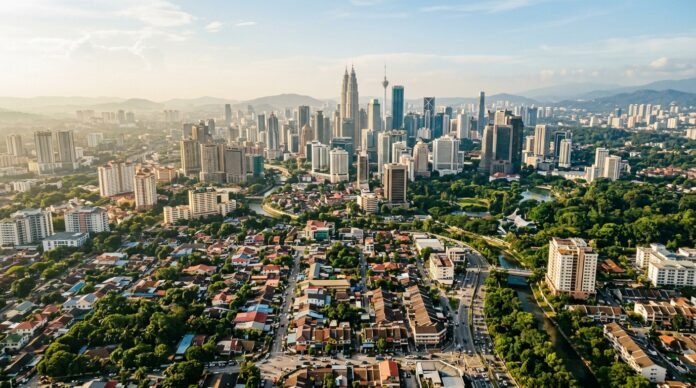

KL makes more sense once you stop thinking of it as one city and start thinking of it as a loose collection of very different neighborhoods. The glossy towers, the heritage shophouses, the leafy expat suburbs, and the late night food streets can all sit within a few minutes of each other, and knowing which is which is the difference between a smooth trip and an hour lost in traffic. After more than a decade here I have lived in and moved around several of these areas, so this is the plain, honest map: what each neighborhood is for, who it suits, and where to base yourself.
This guide links to hotel and tour pages that include affiliate links. If you book through them I earn a small commission at no extra cost to you.
The short version
For a first visit, base yourself in Bukit Bintang for walkable food and shopping, or KLCC for the skyline and polish. For budget and old KL character, head to Chinatown. For transit and early flights, KL Sentral. For a local, residential feel, especially on a longer stay or with family, look at Bangsar, Mont Kiara, or TTDI. Everything below explains what each one is actually like.

Why you can trust this guide
I have lived in Kuala Lumpur for more than ten years and have called more than one of these neighborhoods home. So these are not map based guesses. They are how the areas actually feel to live in and move between.
The central neighborhoods (best for visitors)
Bukit Bintang
The shopping and entertainment heart of the city, and the easiest base for a first timer. Malls, the Jalan Alor food street, the Changkat bar strip, and good train links all sit within a short walk, so you can do almost everything on foot. Lively and central, busy and loud late at night. Best for first timers, shoppers, and social travelers. See the full Bukit Bintang guide and the best hotels in Bukit Bintang.
Getting your bearings: the spine is Jalan Bukit Bintang, running past Pavilion, Lot 10, Fahrenheit88 and Starhill. Jalan Alor sits one block behind it for food, and Changkat Bukit Bintang runs parallel for bars. Bukit Bintang MRT and the monorail station sit at the centre. Together with KLCC this forms what locals call the Golden Triangle, KL’s main commercial district.
The practical detail: Bukit Bintang is the most connected area in the city, with the monorail, the MRT and a covered walkway that takes you to KLCC in about fifteen minutes without stepping outside. The trade-off is noise. Streets around Changkat run late, so ask for a room away from the bar side if you are a light sleeper.
KLCC
The postcard district, built around the Petronas Towers and the park at their feet. Polished, calmer, and a little pricier, with the best skyline and the upscale hotels. Strong for couples, luxury travelers, and business trips. Bukit Bintang is a short walk or one monorail stop away, so you are never far from the buzz. See the KLCC guide and the best hotels in KLCC.
Getting your bearings: everything orbits Suria KLCC and the park behind it, with Jalan Ampang running along the north side and Jalan P Ramlee just west for late-night bars. KLCC LRT station sits underneath the mall, and Ampang Park station is a short walk north. The area is compact enough to cross on foot in fifteen minutes.
The practical detail: KLCC is polished and slightly corporate, which suits some people and bores others. Everything sits around one park, so you can spend a full day here without transport. Prices are the highest in the city, and the area empties of atmosphere once the mall closes.
Chinatown and Petaling Street
Old KL, where your money goes furthest and the character is thickest. Heritage shophouses, the covered market chaos of Petaling Street, temples, and some of the best cheap food in the city. Gritty in places, central, and full of atmosphere. Best for budget travelers, backpackers, and food and heritage lovers. See the Chinatown guide.
Getting your bearings: Jalan Petaling is the covered market street everyone means by Petaling Street, with Jalan Sultan and Jalan Tun H S Lee running alongside and holding most of the temples, coffee shops and older hotels. Pasar Seni station serves both the LRT and MRT, and Central Market is directly across from it.
The practical detail: Chinatown is the best value in central KL and the most characterful, but it is also the scruffiest. Buildings are older, some hotels are tired, and it can feel deserted after the market packs up. For travellers who want atmosphere over polish, it is the obvious choice.
KL Sentral area and Brickfields
KL Sentral is the transport hub where every rail line and the airport train meet, which makes it a logistics base rather than a sightseeing one. Right next door, Brickfields is KL’s Little India, full of South Indian food and colour. Best for stopovers, early flights, and day trippers. See the KL Sentral area guide.
The residential neighborhoods (best for longer stays)
Getting your bearings: KL Sentral is the interchange itself, with the Nu Sentral mall attached and the hotel towers around it. Brickfields runs south from there along Jalan Tun Sambanthan, which is where the garland shops, temples and banana leaf restaurants are. The walk between the two takes about five minutes.
The practical detail: these are really two places stitched together by a rail interchange. KL Sentral is efficient and characterless, useful mainly for the airport train. Brickfields next door is the opposite: loud, colourful and full of the best South Indian food in the city. Stay in one, eat in the other.
Bangsar
The expat favourite, and an easy place to feel at home. Bangsar is all about dining, cafes, bars, and a relaxed evening stroll, without the tourist crush. It has its own character and a strong food scene, and it is well liked by long stayers and repeat visitors. Best for foodies, longer stays, and anyone wanting a local rhythm. See the Bangsar guide.
Getting your bearings: the heart is Jalan Telawi, a short grid of cafes, bars and shops around Bangsar Village. Jalan Maarof is the main road through, and Jalan Bangkung a couple of streets away holds the best of the restaurants. Bangsar LRT sits on the far side of Jalan Maarof, roughly a fifteen-minute walk from Telawi.
The practical detail: Bangsar rewards you for slowing down. The restaurants on Jalan Bangkung, the Sunday market and the cafe streets are the draw. The catch is the LRT station sits a fair walk from the good part, so people end up using Grab for short hops more than they expect.
Mont Kiara
Quieter, greener, and the most family oriented of the expat areas. Heavy on serviced apartments with pools and kitchens, popular with families and people staying weeks rather than days, and home to several international schools. Best for families, long stays, and a calm base. See the Mont Kiara guide.
Getting your bearings: a cluster of condo towers along Jalan Kiara and the roads off it, with Publika just to the south doing the heavy lifting for shops, food and a surprisingly good arts programme. There is no useful rail station, which is the defining fact about living here.
The practical detail: Mont Kiara works because of what is inside the condos rather than outside them: pools, gyms, playgrounds, and other expat families. Outside, it is high-rises and traffic. Excellent for a family posting, frustrating if you wanted to feel like you had moved to Asia.
TTDI (Taman Tun Dr Ismail)
Leafy, local, and genuinely lovely. Near a great wet market and the entrance to a forest park, TTDI is a window into how settled KL residents actually live, with good food and a neighborhood feel rather than a tourist scene. Best for repeat visitors and anyone wanting the real residential KL. See the TTDI guide.
Getting your bearings: built around a wet market and a short high street of restaurants and shops, with Bukit Kiara and its trails on the edge for anyone who wants to run or hike. TTDI has its own MRT station, unusual for a suburb this residential, and the main reason it holds value.
The practical detail: TTDI is the local favourite that expats discover late. It has a wet market and a genuine high street rather than a mall, plus an MRT station, which puts it in a small group of KL suburbs you can live in without driving daily. Better value than Bangsar for more space.
Damansara Heights and Bangsar South
Two more of the comfortable, established areas worth knowing. Damansara Heights is the upmarket, embassy and executive end of the city, quiet and green. Bangsar South is a newer, planned commercial and residential pocket popular with the corporate and coworking crowd. Both are more about living and working than sightseeing. See the Damansara Heights guide and the Bangsar South guide.
The character neighborhoods worth a visit
Getting your bearings: Damansara Heights sits on the hills west of the centre, served by Pusat Bandar Damansara MRT, and is largely low-rise housing with a small cluster of offices. Bangsar South is a separate development further south near Kerinchi station, built as an office and apartment campus rather than a neighbourhood that grew.
The practical detail: these two have almost nothing in common beyond both being residential. Damansara Heights is old money, big houses and embassies, with no street life at all. Bangsar South is new-build offices and apartments aimed at young professionals, well connected and reasonably walkable within itself.
Kampung Baru
A pocket of old Malay village life sitting in the middle of the modern city, with traditional wooden houses, a famous night market, and the Petronas Towers rising right behind it. It is a striking contrast and a great walk, especially in the evening. More of a place to visit than to stay. See the Kampung Baru guide.
Getting your bearings: a grid of low wooden houses and food stalls immediately north of the city centre, with its own LRT station. The Petronas Towers are visible from most of it, which is the whole point. Walkable from KLCC in about twenty minutes, though the last stretch is not pleasant in the heat.
The practical detail: Kampung Baru is somewhere to visit rather than stay. Wooden houses, Malay food stalls, and the sharpest contrast in KL with the towers directly behind. Come in the evening or during Ramadan, when the bazaar here is the best food event in the city. Accommodation options are limited and basic.
Desa Sri Hartamas
A compact, lively residential and dining enclave next to Mont Kiara, popular with expats for its restaurants and easygoing nights out. Best known as a place to eat and socialise rather than a tourist base. See the Desa Sri Hartamas guide.
Bukit Nanas
The wooded hill between Bukit Bintang and the old town, holding KL Tower and the forest reserve at its base. Quieter and greener than anywhere else this central, with a handful of hotels on the slopes around Jalan Raja Chulan. Worth knowing about if you want a central base without the noise of Bukit Bintang, though the walk up from the station is steep and hot.
Getting your bearings: Bukit Nanas monorail and Dang Wangi LRT both sit at the foot of the hill. Everything is a short but uphill walk from there.
Chow Kit
North of the centre, and the most honestly rough-edged area in this guide. A huge daily wet market, cheap accommodation, and a reputation that is partly earned and partly dated. It has genuinely improved in recent years and the market is one of the best in the city, but it is not where a first-time visitor should book a room.
Getting your bearings: strung along Jalan Tuanku Abdul Rahman, with Chow Kit monorail station in the middle. Fine to visit in daylight for the market, less appealing late at night.
Visiting and living want different areas
This is the distinction most guides miss, and it causes real mistakes. The areas that make a great short trip and the areas that make a good life here barely overlap.
Visitors want density. Being able to walk out of the hotel and find food, a station and something to look at matters more than anything else on a four-day trip. That points at Bukit Bintang, KLCC or Chinatown, and almost nothing else. A visitor who books Mont Kiara because it looked nice online will spend the week in traffic.
Residents want the opposite. Space, quiet, a supermarket, schools, and somewhere the noise stops at night. That points at Mont Kiara, TTDI, Damansara Heights or Desa ParkCity, none of which are places you would choose for a short holiday.
Bangsar and Bangsar South sit in between, which is why they suit longer stays: a month, a remote-work stint, or a first landing while you work out where you actually want to be.
If you are moving rather than visiting, our guide to the best expat areas goes into rents, schools and commutes properly.
How to pick your neighborhood
Match the area to the trip and it falls into place. A short first visit wants central and walkable, so Bukit Bintang or KLCC. A tight budget or a love of old streets wants Chinatown. An early flight or lots of day trips wants KL Sentral. A longer stay, a family, or the wish to live like a resident wants Bangsar, Mont Kiara, or TTDI. And if you just want to wander somewhere with real character, Kampung Baru and the old town reward an afternoon. For the booking detail, the full breakdown sits in where to stay in Kuala Lumpur.
Every KL neighborhood compared
The last column matters most. Some of the best areas to visit are poor places to stay, and some of the nicest places to live are dull for a short trip.
| Area | Best for | Price | Rail | Walkable | Stay or visit? |
|---|---|---|---|---|---|
| Bukit Bintang | First-timers, shopping, food | Mid-high | Excellent | Yes | Stay |
| KLCC | Luxury, the towers, families | High | Excellent | Yes | Stay |
| Chinatown | Budget, heritage, character | Low | Good | Yes | Stay |
| KL Sentral | Transit, airport access | Mid | Excellent | Partly | Stay |
| Brickfields | Food, culture | Low-mid | Excellent | Yes | Visit |
| Bangsar | Cafes, longer stays | High | Fair | Mostly | Either |
| Mont Kiara | Expat families | High | Poor | No | Live |
| TTDI | Local feel, value | Mid | Good | Mostly | Live |
| Damansara Heights | Space, privacy | Highest | Poor | No | Live |
| Bangsar South | Remote workers | Mid | Good | Yes | Either |
| Kampung Baru | Malay food, heritage | Low | Good | Yes | Visit |
| Desa Sri Hartamas | Food, nightlife | Mid | Poor | Partly | Live |
Getting between neighborhoods
KL is bigger than it looks and traffic is heavy, so how you move between areas matters. The MRT, LRT, and monorail connect most of the places visitors care about and are far faster than a car at rush hour, while Grab fills the gaps cheaply. The central neighborhoods are walkable within themselves but not always to each other, and the residential areas usually need a train or a Grab to reach the sights. For the full picture see getting around Kuala Lumpur.
How far apart are they really
KL looks compact on a map and behaves differently on the ground. Distances are short but the heat, the road layout and the traffic all conspire against you. A few things worth knowing before you plan.
- Bukit Bintang to KLCC is the one genuinely pleasant walk between two central areas, thanks to the covered air-conditioned walkway. Around fifteen minutes.
- Chinatown, Merdeka Square and Central Market are effectively one walkable district, despite sounding like three separate places.
- KL Sentral to Brickfields is a five-minute walk, which is why one is a good base and the other is a good dinner.
- Anything to Mont Kiara, Damansara Heights or Desa ParkCity means a car or a Grab. There is no useful rail, and this is the single biggest surprise for new arrivals.
- Rush hour roughly doubles road journeys. A twenty-minute drive at 11am is forty-five at 6pm. The train is immune to this, which is the whole argument for staying near a station.
Frequently asked questions
What are the main neighborhoods in Kuala Lumpur?
For visitors, the key central areas are Bukit Bintang (shopping and food), KLCC (the towers and luxury), Chinatown (budget and heritage), and the KL Sentral area (transit). The main residential and expat areas are Bangsar, Mont Kiara, and TTDI.
Which KL neighborhood is best to stay in?
Bukit Bintang is the easiest first base for walkable food and shopping, while KLCC suits those wanting the skyline and polish. For a longer or family stay, Bangsar and Mont Kiara are calmer and more residential.
Where do expats live in Kuala Lumpur?
Commonly in Bangsar, Mont Kiara, TTDI, Damansara Heights, and Bangsar South. These areas offer dining, international schools, serviced apartments, and a residential feel away from the tourist centre.
What is the most interesting neighborhood in KL?
For character, Chinatown and Kampung Baru stand out, the first for old KL heritage and street food, the second for traditional Malay village houses sitting right beneath the modern skyline.
How do you get between KL neighborhoods?
The MRT, LRT, and monorail link most areas visitors use and beat the traffic, with Grab filling in cheaply for the rest. Central areas are walkable within themselves, but you will usually take a train or Grab between districts.
Plan the rest of your trip
- Where to stay in Kuala Lumpur
- Things to do in Kuala Lumpur
- Kuala Lumpur food and where to eat
- Getting around Kuala Lumpur
- KL in 3 days: a first timer itinerary
Where to start
Most people use this guide to pick a base, so the natural next step is the hotel breakdown by area: where to stay in Kuala Lumpur.

