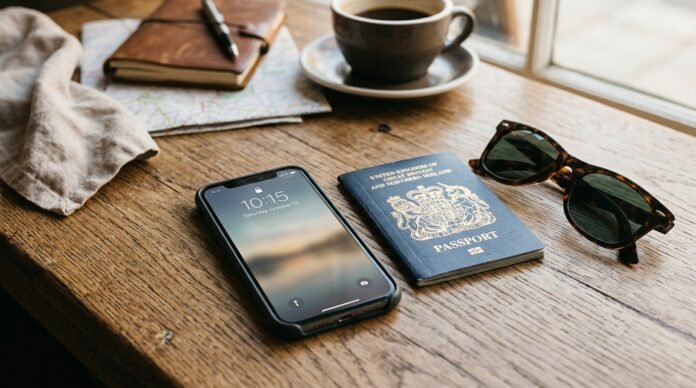

Getting online the moment you land is the single thing that makes everything else in Malaysia easy, because Grab, maps, and translation all need data. The simplest way to do that now is an eSIM you set up before you fly, so you step off the plane already connected with nothing to buy at the airport. Here is how eSIMs work for Malaysia, whether one is right for you, and how to pick and set up a plan.
Some links below are affiliate links. If you buy through them I earn a small commission at no extra cost to you. I only recommend what I would use.
The short answer
For most travelers, an eSIM is the easiest way to get data in Malaysia: buy it online before you fly, install it in a couple of minutes, and it activates when you land. A local physical SIM can be cheaper for very heavy data over a long stay, but for a normal trip the convenience of an eSIM wins. Set it up before you leave home so you are connected the second you arrive.
What I recommend: an Airalo eSIM for Malaysia, installed before you fly. Simple, reliable, and you land connected.
What is an eSIM, quickly
An eSIM is a digital SIM card built into most recent phones, so instead of swapping a physical card you install a data plan from an app or a QR code. That means you can buy a Malaysia plan from your sofa at home, install it, and have it ready to switch on when you arrive, all without touching your normal home SIM, which stays in place for calls and texts. The only requirement is an eSIM compatible phone, which most phones from the last few years are (check your specific model supports eSIM before buying).
eSIM vs local SIM: which is better for Malaysia?
Both work well, so it comes down to your trip.
An eSIM wins on convenience: you buy and install it before you fly, you skip the airport SIM counter queue, you keep your home number active, and you are connected the instant you land. It is the right call for most visitors on a normal trip.
A local physical SIM can win on price and data volume, since local Malaysian providers sell generous tourist data packages, often cheaply, bought at the airport or any phone shop with your passport. It makes more sense if you are staying weeks, need very heavy data, or want a local number for things like verification. The downside is the airport queue and swapping out your home SIM.
For a typical short to medium trip, the eSIM is simpler and worth the small premium. For a long stay, look at a local SIM. For the wider context see getting around Kuala Lumpur.

What a local SIM actually costs
Worth having these in front of you before buying a travel eSIM, because the honest answer is that a local prepaid SIM is usually cheaper. Prices as of September 2026, and they move, so confirm at the counter.
| Option | Rough price | What you get |
|---|---|---|
| CelcomDigi short tourist pass | From RM 15 | Unlimited, around 3 days |
| Hotlink travel SIM, 7 days | Around RM 25 | About 20GB plus calls |
| CelcomDigi 30 day tourist pass | Around RM 60 | About 200GB at up to 100 Mbps |
| Hotlink 30 day packages | RM 50 to RM 65 | Large or unlimited data plus calls |
| Local prepaid generally | RM 12 to RM 60 | Varies by allowance and validity |
| Travel eSIM brands | From roughly USD 1.50 a day | Convenience, working when you land |
The catch nobody selling eSIMs mentions. The best value local plans are often physical SIM only. Hotlink’s large 200GB deal has been sold as a physical SIM, with the eSIM version limited to a smaller, shorter plan. Choosing an eSIM for convenience can therefore cost you the best deal on the shelf, so check which format a plan is actually offered in before you commit.
Two rules from the February 2026 standard that change the maths. A tourist prepaid SIM is now valid for a maximum of three months and is then automatically terminated, so you cannot keep a Malaysian number alive between trips by topping it up. And self registration through a telco app is routed through MyDigital ID, which visitors cannot obtain, so you have to register in person at a counter. Neither applies to a travel eSIM, which is the strongest practical argument for one.
The practical split: if you want to land connected and not think about it, buy a travel eSIM before you fly and accept paying a premium. If you are here more than a few days and care about the money, buy a local prepaid SIM at the airport or a mall, which will nearly always give you more data for less.
How to choose an eSIM plan
A few things to match to your trip, rather than just grabbing the cheapest:
Data amount: estimate generously, since maps and ride hailing eat data. A light user might manage on a small plan, but most people are happier with a mid size data allowance for a week or so (check current plan sizes and prices, as these change often).
Validity: make sure the plan covers your whole trip length, not just a few days. Coverage: check the plan uses a strong local network, since coverage in KL and the main tourist areas is good but can thin out in remote areas. Top up: a plan you can extend or top up easily saves hassle if you run low.
The providers
There are several reputable travel eSIM providers, and they are broadly similar in how they work, differing mainly on price, plan sizes, and app quality. Airalo is the one I use and recommend for Malaysia, with straightforward plans and a reliable app. Other well known options include Holafly and similar global eSIM brands, which are worth comparing if you want unlimited data or a specific feature. Rather than quote prices that change constantly, check the current plans directly. For my pick, see Airalo’s Malaysia plans.
Malaysia eSIM providers compared
How the main options stack up (plans and prices change constantly, so check current rates before buying):
| Provider | Best for | Notes |
|---|---|---|
| Airalo | Most travellers | Market leader, easy app, reliable. Data-only on standard plans; cheap small-to-mid plans. |
| Nomad | Value | Often the best per-GB price for data-only plans; can use Maxis or CelcomDigi. |
| Holafly | Heavy/unlimited use | True unlimited-data plans, but a fair-use policy and hotspot capped around 500MB/day. |
| Local SIM | Long stays, most data | Cheapest per GB, but since Feb 2026 needs your original passport and a facial recognition check at a counter. |
In short: Airalo for easy and reliable, Nomad if you want the best value on a data-only plan, Holafly if you genuinely want unlimited data, and a local SIM only if you are staying a while and need lots of data and a local number. For my pick, see Airalo’s Malaysia plans.
Coverage across Malaysia
All the travel eSIMs ride on Malaysia’s local networks (mainly Maxis and CelcomDigi), which cover around 96 to 97 percent of populated areas. In practice that means a strong, fast connection in Kuala Lumpur, Penang, Melaka, and the main tourist spots, good coverage in Langkawi, and the only real weak spots being deep rainforest and remote islands (Taman Negara, the Perhentians) where any network thins out. For inland or Borneo travel, CelcomDigi tends to have the widest reach.
How to set it up before you fly
The whole point is to do this at home. Buy your Malaysia eSIM online, then follow the provider’s install steps, usually scanning a QR code or installing through their app, which adds the eSIM to your phone. Many plans let you install in advance and only activate when you arrive or first connect, so check the activation terms so you do not start the clock early. Then on landing, switch the eSIM on for data, keep your home SIM for calls if you like, and you are connected. Doing this before you leave means no airport scramble.
Common mistakes
Waiting until you land to sort data, then being stuck unable to open Grab or maps. Buying a plan with too little data and running out mid trip. Not checking your phone actually supports eSIM before buying. Activating the plan days early by mistake and wasting validity. And forgetting that an eSIM gives you data, not a local phone number, so if you need a local number for something specific, a physical SIM may suit better.
Frequently asked questions
What is the best eSIM for Malaysia?
For most travelers an eSIM from a reputable provider like Airalo is the easiest choice: buy and install before you fly, and you land connected. Compare current plan sizes and prices, and pick one that covers your whole trip with enough data for maps and Grab.
Is an eSIM or a local SIM better for Malaysia?
An eSIM is more convenient, since you set it up before you fly and skip the airport queue while keeping your home number. A local SIM can be cheaper for heavy data or long stays. For a normal trip, the eSIM wins.
Will an eSIM work as soon as I land in KL?
Yes, if you install it before you fly and it activates on arrival or first connection. Check the activation terms so you do not start it early, then switch it on when you land.
Does my phone support eSIM?
Most phones from the last few years do, but check your specific model before buying, since older or some region specific phones may not.
How much data do I need for Malaysia?
More than you expect, since maps and ride hailing use a lot. A mid size data plan suits most people for about a week, with the option to top up if you run low. Check current plan sizes when you buy.
Can I keep my WhatsApp number with an eSIM?
Yes. A data-only travel eSIM does not change your phone number, so WhatsApp, and any other apps tied to your number, keep working exactly as before. You just get your data through the eSIM instead of expensive roaming.
Is an eSIM cheaper than roaming or an airport SIM?
Almost always cheaper than home-carrier roaming, which can be punishing. Versus an airport SIM, an eSIM is usually similar in price or slightly more per GB but saves you the passport queue and counter hassle on arrival, which since February 2026 also means your original passport and a facial recognition check for a physical local SIM. A local SIM only wins clearly if you need a lot of data on a longer stay.
What happens if I run out of data?
You simply top up in the provider’s app, usually in a minute or two, no need to buy a whole new plan. If you are a heavy user, start with a larger plan or an unlimited option like Holafly to avoid topping up mid-trip.
Plan the rest of your trip
- Getting around Kuala Lumpur
- Grab in Malaysia
- KLIA to KL city
- Kuala Lumpur travel guide
- Where to stay in Kuala Lumpur
Get connected before you fly
Install a Malaysia eSIM at home and land ready to go: see Airalo’s Malaysia plans.

