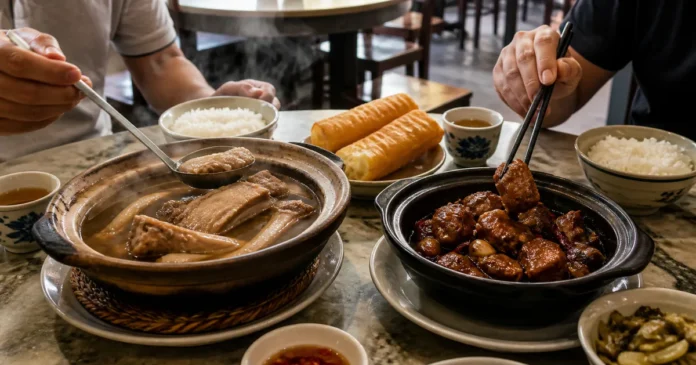

Bak kut teh translates as meat bone tea, and there is no tea in it. The name refers to the strong Chinese tea traditionally drunk alongside the meal, which cuts through the fat. That is the first thing worth knowing, and the second is that it comes in two quite different forms which most guides treat as one dish.
It is pork rib soup, slow simmered in herbs and garlic, eaten with rice and usually shared. It is a breakfast and lunch dish more than a dinner one, and it is one of the more distinctly Malaysian Chinese things you can eat.
The short version
- Wet and dry are different dishes. Wet is the herbal soup, dry is a thick reduced gravy with chilli and dried squid
- Klang is the home of it, about an hour west, and the trip is a real one for enthusiasts
- You do not need to leave KL. The city has plenty of good bak kut teh
- It is not halal. It is pork. The chicken version, chik kut teh, is the alternative
- Go in the morning. Many of the best places sell out and close by early afternoon
Wet or dry, and how to choose
This is the decision that matters and nobody explains it.
Wet bak kut teh is the original and the default. Pork ribs and other cuts simmered in a dark, herbal, garlicky broth, served in a claypot, with the soup as the point. The Hokkien style common in Malaysia is savoury and herbal with a lot of dark soy, and it is deeply savoury rather than spicy. Order this first if you have never had it.
Dry bak kut teh is a Klang development and it is not simply the same dish with less liquid. The broth is reduced to a thick clinging gravy and cooked with dried chilli, dried squid, wolfberries and dried dates. It is darker, more intense, slightly sweet and slightly spicy. Many locals order both, one of each, to share.
If you are eating alone and can only have one, wet for the tradition, dry if you like bold and concentrated flavours.
| Wet | Dry | |
|---|---|---|
| Form | Soup in a claypot | Thick clinging gravy |
| Flavour | Herbal, garlicky, deeply savoury | Darker, slightly sweet, slightly spicy |
| Key extras | Dark soy and herbs | Dried chilli, dried squid, wolfberries, dates |
| Origin | The original Hokkien style | A Klang development |
| Order it if | It is your first time | You like bold, concentrated food |
The Klang question
Klang, about an hour west of the city, is where bak kut teh in Malaysia is generally said to have started, and the town takes the claim seriously.
The usual account credits a Chinese physician in Klang in the 1930s. Historians argue about it, and the dish has clear Hokkien immigrant roots that predate any single origin story, so treat the specific claim as contested rather than settled. What is not contested is that Klang has the densest concentration of long established, multi generation bak kut teh restaurants in the country, and that dry bak kut teh developed there.
Is the trip worth it? If you care about the dish, yes, and Klang has plenty else to eat. If you are on a short first visit to Kuala Lumpur, no. The bak kut teh in the city is good, and an hour each way is a large slice of a holiday for one bowl of soup. Our Klang day trip guide covers the journey and what else to do there if you decide to go.
How to order and what comes with it
Bak kut teh is ordered by the pot and by the cut, and the cut is where the difference in price and texture sits.
- Tua kut, the big meaty rib, is the premium cut and what most people want
- Small ribs are the standard and cheaper
- Lean meat, belly and trotter are all common, and the fattier cuts are traditional rather than an error
- Offal, including intestine and liver, is on most menus and is entirely optional
The standard accompaniments are worth ordering and cost very little. Yau char kwai, fried dough sticks, are torn up and dipped into the broth so they soak it up. Rice, plain or with fried shallots. Salted vegetables and enoki mushrooms to add to the pot. A dish of chopped garlic in dark soy with chilli arrives as the dipping sauce for the meat, and using it is the point rather than an option.
And the tea. Chinese tea is served alongside and is meant to be drunk with the meal, which is where the name comes from. Some places brew it at the table.
Where to eat it in Kuala Lumpur
You do not need to go to Klang. Check current hours before travelling, because several of these close one day a week.
Sun Fong Bak Kut Teh, Pudu
Trading since 1971 at Medan Imbi in Pudu, a short distance from Bukit Bintang, which makes it the most convenient serious option if you are staying centrally. Hokkien style, so a dark herbal broth rather than a peppery one. Pig stomach in pepper soup is the other thing regulars order. Plain surroundings, off the tourist route, and busy with locals.
Hing Kee Bakuteh, Kepong
Awarded a Michelin Bib Gourmand in 2022 and worth the journey if you are serious about the dish. The soup is milder and better balanced than most, and the dry version is what people travel for.
Note the hours, because they are unusual. It opens at 11.30am on Tuesday but not until around 3pm from Wednesday to Sunday, and runs late, to roughly 2.30am. It is closed on Mondays. Parking is genuinely difficult and the room gets loud when full.
In Klang, if you go
Teck Teh is one of the oldest names and is now run by the third generation. Lai Hing is known for a thick herbal broth and the tua kut big bone cut. Yap Beng has a strong reputation specifically for dry bak kut teh. Klang shops tend to open early and finish when the pot does.
The halal question
Worth stating plainly, because it gets asked constantly and the answer is often fudged.
Bak kut teh is pork and is not halal. Bak means meat in Hokkien and in this dish it means pork specifically. Restaurants serving it are not halal certified and will not be.
There is an alternative. Chik kut teh replaces the pork with chicken, and it is a real dish rather than a token substitute, lighter and less fatty. Some outlets serving it are halal certified and some are not, so check the certificate rather than assuming that chicken alone makes it halal.
If you are travelling with Muslim companions, this is a dish to plan around rather than to improvise, since the standard version excludes them entirely.
Timing, price and practical notes
Check the hours, because they split two ways. Traditional Klang style shops treat this as a breakfast and lunch dish, opening around 7am and closing when the pot is finished, often by mid afternoon. But several of the best known KL places run the opposite schedule: Hing Kee in Kepong does not open until around 3pm on most days and serves until roughly 2.30am. Neither pattern is more authentic than the other, and assuming either one will strand you. Look up the specific shop.
It is meant to be shared. A pot for one is possible but the format assumes a table ordering several cuts and passing things around. Two people can eat well from one large pot plus rice and sides.
On price, as of September 2026, a single portion typically runs about RM15 to RM25 depending on the cut, with tua kut at the upper end. A shared pot with rice, dough sticks and sides for two generally lands around RM40 to RM70. Older shops often prefer cash.
It is heavy. Rich, fatty, herbal and salty. This is not a light lunch before an afternoon of walking in the heat, and a good many people find it better as a slow morning meal followed by nothing strenuous.
Vegetarians should skip it. Even the broth is pork based, and there is no meaningful vegetarian version. Our vegetarian and vegan guide covers better options.
Frequently asked questions
Is there tea in bak kut teh?
No. The name means meat bone tea, but the tea refers to the strong Chinese tea served alongside the meal to cut the richness. The soup itself is a herbal pork broth.
What is the difference between wet and dry bak kut teh?
Wet is the original herbal soup served in a claypot with the broth as the point. Dry is a Klang development where the broth is reduced to a thick gravy and cooked with dried chilli, dried squid, wolfberries and dates, giving a darker and more intense result. They are different enough that many people order one of each.
Is bak kut teh halal?
No, it is pork. The chicken version, chik kut teh, is the alternative, and some outlets serving it are halal certified. Check the certificate rather than assuming that a chicken version is automatically halal.
Do I need to go to Klang for bak kut teh?
Not for a good bowl. Klang is the traditional home and has the densest cluster of old established shops, but Kuala Lumpur has plenty of good bak kut teh and an hour each way is a lot of a short trip. Go to Klang if you are keen on the dish and want a food focused day out.
When should I eat bak kut teh?
It depends on the shop, and this catches people out. Traditional Klang style places are breakfast and lunch operations that open early and close when the pot is empty. Several well known KL restaurants, including Hing Kee in Kepong, do not open until mid afternoon and serve until the early hours. Check the specific place rather than assuming.
What should I order with it?
Rice, yau char kwai fried dough sticks for dipping in the broth, salted vegetables and enoki mushrooms. The chopped garlic in dark soy that arrives at the table is the dipping sauce for the meat and is part of the dish rather than optional.
Explore more
- Where to eat in Kuala Lumpur, the full food guide
- Klang day trip, if you want to go to the source
- The Malaysian dishes worth seeking out
- Malaysian food explained

