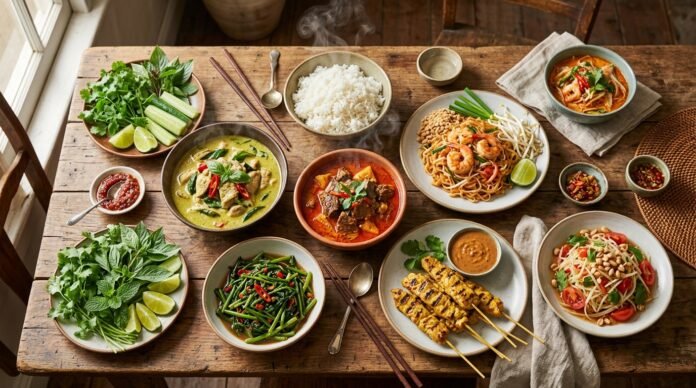

KL might be the best eating city in Southeast Asia, and I do not say that lightly after more than a decade of eating my way around it. Three food cultures, Malay, Chinese, and Indian, have been sharing the same streets for generations, so on a single block you can have nasi lemak for breakfast, char kway teow for lunch, and banana leaf rice for dinner, all of it superb and most of it cheap. This guide is what to eat, where to find it, and the honest calls on what lives up to the hype and what does not.
Some links below are affiliate links. If you book a food tour through them I earn a small commission at no extra cost to you. I only point you toward food I would happily queue for myself.
The short version
If you eat only a handful of things in KL, eat these. Start your day with nasi lemak, the national breakfast. Try char kway teow and Hokkien mee from a Chinese hawker stall. Have banana leaf rice with your hands at least once. Eat satay in the evening off a smoky grill. And go to a mamak late at night for roti canai and teh tarik, because that is where KL actually eats.

Why you can trust this guide
I have lived in Kuala Lumpur for more than ten years and I eat like a local, not like someone working through a top ten list. I have my regular stalls, my strong opinions, and a few dishes I had to learn to love. Where a place deserves the queue I will say so, and where the famous name is coasting on reputation I will say that too.
The dishes you have to try
Nasi lemak
If you try one thing, make it this. Rice cooked in coconut milk and pandan, served with sambal, fried anchovies, peanuts, cucumber, and egg, often with fried chicken or rendang alongside. It is the national dish and the default breakfast, wrapped in banana leaf from a stall for a couple of ringgit or plated up in a cafe for more. Two names worth knowing: Village Park Restaurant in Petaling Jaya, which locals will fight you to call the best (the fried chicken is the draw), and Nasi Lemak Wanjo in Kampung Baru, a long-running, sambal-forward Malay institution. For the full breakdown see the best nasi lemak in KL.
Char kway teow and the Chinese hawker classics
Flat rice noodles fried hard over a fierce flame with prawns, cockles, egg, and bean sprouts, smoky from the wok. This is the headline of KL’s Chinese hawker food, alongside Hokkien mee (thick noodles in dark soy), wantan mee, and bak kut teh (a peppery pork rib soup that is a weekend ritual). The best versions come from old stalls that have made one dish for decades. Expect to pay only a handful of ringgit a plate.
Banana leaf rice
The great Indian feast of KL. Rice piled on a banana leaf with several vegetable sides, curry, pickle, papadam, and your choice of meat or fish, with free refills of rice and sides. Eat it with your right hand if you can, and fold the leaf toward you at the end to signal you enjoyed it. Brickfields, KL’s Little India, is the classic place to do it, with long-running institutions like Sri Nirwana Maju and Devi’s Corner drawing the crowds. For the full list see the best banana leaf rice in KL.
Satay
Skewers of marinated meat grilled over charcoal and served with a thick peanut sauce, cucumber, onion, and pressed rice cakes. It is an evening food, best from a smoky street grill, and Jalan Alor is an easy place to find it. Cheap, communal, and exactly what you want with a cold drink.
The mamak: roti canai and teh tarik
A mamak is an Indian Muslim open air eatery, open late or all night, and it is the beating heart of how KL eats and hangs out. Order roti canai, a flaky flatbread you tear and dip in curry, and teh tarik, sweet milk tea “pulled” between two cups until frothy. A meal here costs almost nothing and the people watching is free.
Hokkien mee
KL’s own version, and nothing like the Singapore dish of the same name. Thick yellow noodles braised very dark in black soy sauce with pork, prawns, cabbage and crisp pork lard on top. Where to try it: the Chinese hawker stalls around Petaling Street and the older coffee shops in Pudu. A supper dish rather than a lunch one.
Bak kut teh
Pork ribs simmered for hours in a herbal broth of garlic, star anise and Chinese medicinal herbs, served with rice and youtiao dough sticks. Traditionally a breakfast dish. Where to try it: Klang, half an hour southwest, is the spiritual home and worth the trip if you are serious. In the city, the shops around Pudu and Cheras do good versions. Not halal.
Hainanese chicken rice
Poached chicken with rice cooked in the stock, served with chilli sauce, ginger paste and clear soup. Simple to the point of austere, which is exactly why a good one is memorable. Where to try it: the old Hainanese coffee shops in the city centre and the specialists in Chinatown. The rule is simple: join the shop with the queue at noon.
Nasi kandar
Rice with your pick of curries, and then the crucial bit: the server floods the plate with a mix of several gravies, which is where the magic happens. Order by pointing. Where to try it: the 24-hour Indian Muslim restaurants scattered across the city. Halal, cheap, and open at four in the morning when nothing else is.
Curry laksa
Noodles in a coconut curry broth with tofu puffs, bean sprouts, prawns and a slick of chilli oil. Note that this is the KL version. The asam laksa that Penang is famous for is a sour, tamarind-based fish broth and a completely different dish. Ordering laksa in KL gets you the coconut one. Our guide to Malaysian food explains where the regional versions come from and what else is worth seeking out. Where to try it: hawker centres and the older Chinese coffee shops.
Char siu and roast meats
Glossy red barbecue pork and crackling roast pork belly, sliced over rice with a spoon of dark sauce. Where to try it: the roast meat shops in Chinatown with the ducks hanging in the window. Order the mixed plate if you cannot decide. Not halal.
Rendang
Beef slow-cooked in coconut milk and spice paste until the liquid has almost entirely gone and the meat is dark and dense. Not a curry, despite what menus abroad suggest. Where to try it: Malay food stalls and nasi campur counters, especially around Kampung Baru, and it turns up as a nasi lemak topping.
Ikan bakar
Whole fish rubbed with spice paste, wrapped in banana leaf and grilled over charcoal, served with sambal and lime. One of the great underrated Malay dishes and a lighter option among all the rice and noodles. Where to try it: evening ikan bakar stalls and Malay night markets.
Kaya toast and the kopitiam breakfast
Charcoal-toasted bread with coconut jam and a slab of cold butter, two soft-boiled eggs in a saucer with dark soy and white pepper, and a glass of thick kopi. The proper Malaysian breakfast, and a fraction of the price of a cafe brunch. Where to try it: any traditional kopitiam with marble tables and ceiling fans. The older and shabbier, the better.
Cendol and ais kacang
Cendol is shaved ice with green pandan jelly strands, coconut milk and dark palm sugar syrup. Ais kacang is the taller, more chaotic cousin, piled with beans, sweetcorn, jelly and evaporated milk. Both exist because of the heat. Where to try it: dessert stalls at hawker centres, and the stalls around Petaling Street in the afternoon.
Pisang goreng and apam balik
Two street snacks worth going out of your way for. Pisang goreng is banana in batter, deep-fried, crisp outside and molten inside. Apam balik is a thick folded pancake stuffed with crushed peanuts, sugar and sweetcorn. Where to try it: roadside stalls in the late afternoon, and Brickfields does a particularly good pisang goreng trade.
Durian, if you dare
The fruit with the reputation. Custard-textured, intensely sweet, and with an aroma that gets it banned from hotels and trains, which is not a joke: you will see the crossed-out durian signs on the rail network. Musang King is the variety worth paying for. Where to try it: durian stalls around Chinatown and the SS2 area, where they will open it in front of you and you eat it standing up. Try it once, from a stall, before committing to a whole one.
What to eat, and when
Malaysian eating runs to a rhythm, and some dishes genuinely are better at certain hours. Nobody will stop you eating bak kut teh at midnight, but this is roughly how locals order the day.
| When | What to eat | Where |
|---|---|---|
| Early breakfast | Nasi lemak, kaya toast and soft eggs, bak kut teh | Kopitiam, Malay stalls |
| Mid morning | Roti canai, teh tarik | Mamak |
| Lunch | Banana leaf rice, chicken rice, nasi kandar, economy rice | Brickfields, Chinatown, mamak |
| Afternoon | Cendol, ais kacang, pisang goreng, apam balik | Hawker and roadside stalls |
| Dinner | Ikan bakar, curry laksa, roast meats, satay | Night markets, hawker centres |
| Supper, late | Hokkien mee, char kway teow, more roti canai | Jalan Alor, Chinese hawkers, mamak |
Where to eat: the food areas
Jalan Alor
The obvious one, and still worth it. An entire street in Bukit Bintang that turns into open air food stalls every evening, heavy on seafood, satay, and Chinese hawker dishes. It is touristy and a little pricier than a neighborhood stall, but the atmosphere is real and the variety in one place is unmatched. See the full guide to Jalan Alor.
Hawker centres and food courts
The most reliable cheap eating in the city. A hawker centre is a cluster of independent stalls around shared seating, so a group can eat completely different things at one table for very little. These are where locals eat daily, and the quality at the busy stalls is excellent. For the rundown see the best hawker centres in KL.
Chinatown and Petaling Street
Old KL flavour and some legendary stalls tucked among the market stalls. Famous for specific institutions that have made the same dish for generations, and well worth a wander with an empty stomach.
Brickfields (Little India)
The place for South Indian food, banana leaf rice, and Indian sweets, a short walk from KL Sentral. Colorful, fragrant, and great value.
Bangsar and the cafe scene
Where the city eats when it wants something more modern. Bangsar is the expat favourite for restaurants, cafes, and brunch, without the tourist crush. If you want third wave coffee and a slower meal, this is the area. See the best brunch spots in KL.
ICC Pudu
A working wet market with a hawker floor above it, and one of the best Chinese breakfasts in the city. This is not a tourist destination, which is precisely the appeal. Go before 10am, because the good stalls sell out and much of it shuts by early afternoon.
Kampung Baru
The place to eat Malay food in the city centre. Nasi lemak, nasi campur, ikan bakar and satay from stalls in a wooden-house village under the skyline. Best in the evening. During Ramadan the bazaar here is the single best food event in KL, and worth planning a trip around.
How to order at a hawker centre
The system confuses everyone the first time, and nobody explains it. It is simpler than it looks.
- Find a free table first and claim it. A packet of tissues left on the table is the accepted marker, and yes, this is a real convention.
- Note your table number. You will be asked for it.
- Order at each stall separately. One stall does one thing, and that is why the food is good.
- Pay each stall directly, usually cash, though QR payment is increasingly accepted.
- Order drinks from the drinks stall, not the food stalls. The drinks vendor often owns the seating, which is why someone will come and ask what you want to drink almost immediately.
- Food either arrives at your table or you collect it when called.
Two things worth knowing: sharing a table with strangers is completely normal at busy times, and the stall with the longest queue is almost always the right choice. Malaysians will queue twenty minutes for a plate of noodles, and they are not wrong to.
Halal and dietary needs
KL is one of the easiest major cities in the world for halal eating, since Malay and mamak food is halal by default and most malls and chains are certified, so Muslim travelers can eat almost anywhere without thinking twice. Vegetarians do well too, thanks to Indian food and a strong Chinese vegetarian tradition, though it is worth learning to ask, since “vegetarian” dishes can still contain anchovies or shrimp paste. For the specifics see the best halal restaurants in KL and the best vegetarian restaurants in KL.
Rooftop bars and a drink with a view
KL’s other food scene is up high. The rooftop bars give you the skyline and the towers with your drink, which is a better view than any paid deck. Worth one evening, with the caveat that some have a dress code and a minimum spend. See the best rooftop bars in KL.
Should you book a food tour?
For food specifically, a guided tour is one of the few KL bookings I think genuinely earns its money. A good guide takes you to stalls you would walk past, orders the right thing, explains what you are eating, and handles the language, which on the first night in an unfamiliar food culture is worth a lot. The rest of your eating you can absolutely do yourself by just following the crowds to the busy stalls. So my honest split: book one food tour early to get your bearings, then eat independently for the rest of the trip. See the best KL food tours.
My approach: one food tour on the first or second evening to learn the lay of the land, then follow my nose and the longest local queues for the rest. Compare tours on Klook and GetYourGuide.
How to eat like a local
A few habits that make the food better and cheaper. Eat where the queue is local and long, since turnover means fresh food and the crowd is the review. Go to specialists, not generalists, because the stall that makes one dish all day beats the one with a long menu. Carry small cash, as the best stalls are cash only. Eat early or late to dodge the lunch crush. And do not fear the mamak at midnight, which is when KL is at its most itself.
What is overrated, honestly
Not every famous name deserves the queue. Treat the headline tourist food streets as one option among many rather than the main event, because the best eating in KL is usually the unglamorous neighborhood stall that locals line up at, not the spot with the biggest sign. Spend your meals on specialists with a crowd, and you will rarely have a bad one.
Frequently asked questions
What food is Kuala Lumpur famous for?
Nasi lemak, the coconut rice national dish, plus Chinese hawker classics like char kway teow and Hokkien mee, Indian banana leaf rice, satay, and mamak staples like roti canai and teh tarik. KL’s strength is that all three food cultures are excellent and sit side by side.
What should I eat in KL for the first time?
Start with nasi lemak for breakfast, try char kway teow or another wok fried noodle for lunch, have banana leaf rice or satay for dinner, and finish with roti canai and teh tarik at a mamak. That covers the three main food cultures in a day.
Is street food in KL safe to eat?
Generally yes. Eat at busy stalls with high turnover, where the food is fresh and the crowd is the quality check. Bottled or boiled drinks are the norm, and the busiest hawker stalls are some of the most reliable food in the city.
Is Kuala Lumpur good for halal food?
Exceptionally. Malay and mamak food is halal by default and most malls and chains are certified, so Muslim travelers can eat almost anywhere in KL without difficulty.
How much does food cost in KL?
Very little at the source. A hawker dish or a plate of nasi lemak runs a few ringgit, a mamak meal is cheap, and even a sit down restaurant meal is modest by Western standards. KL is one of the best value food cities anywhere.
As a rough guide to what dishes cost (prices vary by place and creep up over time, so treat these as indicative):
| Dish | Typical price |
|---|---|
| Roti canai (mamak) | RM2 to 5 |
| Nasi lemak (stall to cafe) | RM5 to 15 |
| Hawker noodles (char kway teow, etc.) | RM8 to 15 |
| Banana leaf rice | RM15 to 35 |
| Cafe brunch in Bangsar | RM25 to 50 |
Where do locals eat in KL?
At neighborhood hawker centres, mamak stalls, and specialist stalls that have made one dish for years, rather than the tourist food streets. Follow the long local queues and you will eat like a resident.
Plan the rest of your trip
- Where to stay in Kuala Lumpur
- Things to do in Kuala Lumpur
- Jalan Alor food guide
- Best rooftop bars in KL
- KL in 3 days: a first timer itinerary
- Best Malaysian dishes to try in KL
- Where to eat near the Petronas Towers
Ready to eat?
Get your bearings with a guided food crawl, then explore on your own: see KL food tours on Klook or compare on GetYourGuide.

