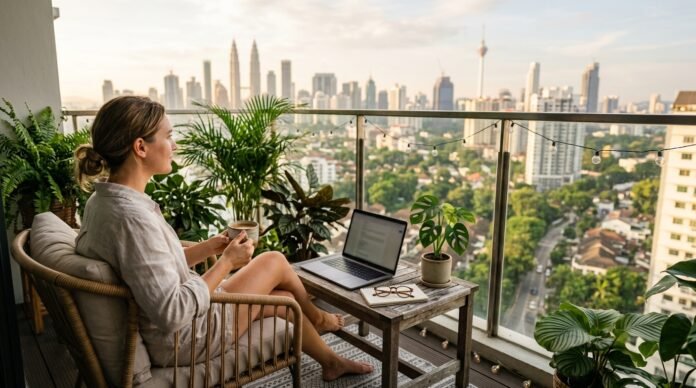

Most “moving to KL” guides are written by people who do not live here. This one is not. After more than a decade as an expat in Kuala Lumpur I have done the apartment hunting, the bank account opening, the visa paperwork, the school questions, and the slow work of actually building a life here, including the mistakes. So this is the honest overview of what living in KL is really like and how to set yourself up, with links to the deeper guides on each piece. One thing up front: anything to do with visas, tax, and banking changes often and matters a lot, so treat this as orientation and always confirm the current rules with official sources before you act.
Some links below are affiliate links. If you use them I earn a small commission at no extra cost to you. I only recommend services I use or would use.
The short version
KL is one of the most comfortable and affordable cities in the world to be an expat. The cost of living is low for the quality of life, English is everywhere, the food and infrastructure are excellent, and there is a large, settled international community. The main things to get right are choosing the right area, sorting the correct visa for your situation, and handling the practical setup of money, healthcare, and (if you have kids) schools.
Why you can trust this guide
I have lived in Kuala Lumpur for more than ten years as an expat, not as a visitor, so this comes from doing it rather than researching it. Where the rules are technical or changeable, I will point you to the official source rather than guess, because getting visa or tax detail wrong is expensive.
Why people move to KL
The pull is a rare combination. The cost of living is low relative to the standard of life, so a comfortable life here costs a fraction of what it would in most Western cities. English is widely spoken, which removes the language barrier that makes some expat destinations hard. The food is world class and cheap, the healthcare is good and affordable, the airport connects you to all of Asia, and the climate is warm year round. Add a large, welcoming international community and it is easy to see why so many people who come for a year end up staying for many.
Best areas for expats to live
Where you live shapes your whole experience. The established expat areas each have a character:
Mont Kiara is the classic family expat hub, full of condos with pools and gyms, international schools, and a large international community, quieter and more suburban in feel. Bangsar is the favourite for those who want dining, cafes, nightlife, and a more connected, walkable lifestyle with character. TTDI is leafy, local, and lovely, popular with people who want a real neighborhood feel rather than an expat bubble. Damansara Heights is the upmarket, quiet, executive end. Bangsar South and the KL Eco City area suit the corporate and coworking crowd who want new build convenience.
For the full breakdown see the best expat areas in KL and the deeper neighborhood guides.
Mont Kiara
The default family expat area, and the one most newcomers get steered towards. High-rise condos with pools and gyms, international schools a short drive away, supermarkets stocking what you are used to. The trade-off is that it is car-dependent and the traffic in and out is genuinely bad at peak times. Comfortable rather than characterful.
Bangsar
Leafy, walkable in parts, and the closest KL gets to a neighbourhood you can live in without a car. Cafes, restaurants, a wet market and an LRT station, though the station is a walk from the good bits. Popular with younger expats and couples, and worth the premium if you value walking somewhere.
Damansara Heights
Quiet, established and the most expensive of the lot. Large houses, embassies, mature trees. Suits families who want space and privacy and do not mind driving everywhere. Not somewhere you will stumble across street life.
TTDI and Desa Sri Hartamas
The middle ground: more local in feel than Mont Kiara, cheaper than Bangsar, with proper neighbourhood restaurants and a wet market. TTDI has an MRT station, which matters more than people realise until they have sat in KL traffic for a year.
Desa ParkCity
A planned suburb built around a lake and a park, and about as close as KL gets to a purpose-built family neighbourhood. Genuinely pleasant, genuinely walkable within its boundaries, and priced accordingly. Completely car-dependent for anything outside it.
KLCC and Bangsar South
The two options for people who want to live centrally and skip the car entirely. KLCC puts you in the middle of everything at a price. Bangsar South is newer, cheaper and built around offices, so it suits remote workers and younger professionals more than families.
Which area suits you
Price is shown relative rather than in ringgit, because rents move and this table should stay useful. The column that surprises people most is the last one.
| Area | Best for | Price | Rail access | Liveable without a car? |
|---|---|---|---|---|
| Mont Kiara | Families, first-time expats | High | Poor | No |
| Bangsar | Couples, younger expats | High | Fair | Mostly |
| Damansara Heights | Space and privacy | Highest | Poor | No |
| TTDI | Value and local feel | Medium | Good | Mostly |
| Desa Sri Hartamas | Value, food, nightlife | Medium | Poor | No |
| Desa ParkCity | Families wanting green space | High | None | No |
| KLCC | Central, no car, short stays | Highest | Excellent | Yes |
| Bangsar South | Remote workers, professionals | Medium | Good | Yes |
Rail access is the real dividing line in KL, and it catches almost everyone out. Several of the nicest expat areas have no usable station at all, which means a car, which means sitting in traffic twice a day. Decide how you feel about that before you decide on an area.
Visas: the honest, careful version
This is the part to be most careful about, because the rules change and depend entirely on your situation, so what follows is orientation only and you must confirm the current detail with official Malaysian government sources or a qualified advisor.
In broad terms, the common routes people ask about are: an employment pass if you have a job with a Malaysian employer, the DE Rantau nomad pass aimed at remote workers and digital nomads, and the MM2H (Malaysia My Second Home) long stay programme, which has been revised more than once and whose requirements have shifted significantly over the years. Each has its own eligibility, income thresholds, and conditions, and these are exactly the numbers that go out of date, so I am deliberately not quoting them here. For an overview of each route see the DE Rantau nomad visa and whether MM2H is still worth it, and always verify against the official immigration and programme websites before making any plans.
Cost of living in KL
KL consistently ranks as one of the better value major cities for expats, with the big savings in housing, food, and transport compared with Western capitals. A modern condo with facilities costs far less than the equivalent elsewhere, eating out is cheap if you eat local, and transport is inexpensive. Imported goods, alcohol, and international school fees are where costs climb. Rather than quote figures that drift, the detailed, regularly updated numbers live in the cost of living in KL guide.
What it actually costs, by household
Rather than quote figures that will be wrong within a year, here is the shape of the budget and which line dominates it. Our cost of living guide has the current numbers.
| Household | Biggest cost | What catches people out |
|---|---|---|
| Single, remote worker | Rent | Condo maintenance fees and parking on top of rent |
| Couple, no children | Rent and eating out | Imported groceries and alcohol, both heavily taxed |
| Family, local schooling | Rent | Running two cars, because one is rarely enough |
| Family, international school | School fees, by a distance | Enrolment levies, transport, devices and trips beyond tuition |
| Retired | Healthcare cover | Premiums rising with age, and pre-existing condition exclusions |
The general rule: local living is remarkably cheap here, and imported living is not. Eat local food, and KL costs a fraction of a Western city. Recreate your home country diet and habits, and the gap closes fast.
Money and banking
Setting up your finances is one of the first practical jobs. Opening a local bank account as an expat is doable but typically requires the right visa or pass and some paperwork, and the exact requirements vary by bank, so it is worth checking current conditions before you arrive. In the meantime, and for moving money internationally, a low fee multi currency service saves a lot versus traditional bank transfers and their exchange markups. For the step by step see opening a Malaysian bank account as an expat.
What I use: a Wise account for moving money internationally and avoiding the exchange markup, alongside a local account for day to day life here.
Healthcare
One of KL’s quiet advantages. Malaysia has good private hospitals at a fraction of Western costs, which is part of why it is a medical tourism destination, and most expats use private healthcare backed by international health insurance. Public healthcare exists and is inexpensive but busier. The sensible setup for most new arrivals is solid international health insurance from the start, then learning the good private hospitals near you. For the detail see healthcare in Malaysia for expats.
Worth sorting early: international health insurance that covers you properly here. SafetyWing suits long term nomads, and there are more comprehensive expat plans worth comparing for families.
Schools, if you have kids
KL has a deep bench of international schools following British, American, IB, Australian, and other curricula, which is a big draw for families and a major reason Mont Kiara and the surrounding areas are so popular. Fees vary enormously and are one of the larger expat costs, and places at the most sought after schools can be competitive, so this is worth researching early. For an expat parent’s overview see international schools in KL.
Renting an apartment
Most expats rent, and the market is good value, but there are local norms worth knowing around deposits, agents, and contracts, and a few ways to overpay if you do not know them. The condos that dominate the expat areas usually come with pools, gyms, and security, and many are available furnished. For how to do it without getting caught out see renting an apartment in KL.
Your first 90 days
The order matters more than the timing. Getting this sequence wrong is the most common way a move to KL becomes stressful, usually because people sign a lease before they understand the commute.
- Before you arrive. Settle your visa route, since everything else depends on it. If you have children, research school places early, because the good ones fill up and the school will effectively decide where you live.
- Week one. Local SIM, then a temporary base rather than a lease. Serviced apartments are cheap here and buying yourself a few weeks is worth far more than the money it costs.
- Weeks two to four. Visit areas at the times you would actually be commuting, not on a quiet Sunday. Do the drive or the train ride in rush hour. This single exercise will change your shortlist.
- Month two. Sign a lease, sort utilities, open a bank account. Banking is easier with the right pass and can be slow without it, so bring more documentation than you think you need.
- Month three. Register with your embassy, sort health cover properly rather than relying on travel insurance, and start building a social life deliberately. It does not happen by accident.
Who KL does not suit
Relocation sites will not tell you this, so here it is. KL is a genuinely good place to live, and it is not for everyone. Better to know now than eighteen months in.
- If you need seasons. It is hot and humid every single day, all year. There is no crisp autumn, no cool snap, no relief. Some people never adjust to this and it wears on them.
- If you want to walk everywhere. Outside a handful of pockets, KL is built for cars. The heat, the pavements and the road layout all conspire against walking, and it is consistently the thing new arrivals struggle with most.
- If you hate driving or traffic. Related, and worse. A twelve-kilometre commute can take an hour at the wrong time of day.
- If you need certainty about staying long term. Visa routes here have changed more than once, sometimes substantially. Plan for the medium term rather than assuming a permanent path.
- If international school fees would stretch you. For families this is usually the largest single cost by a wide margin, and it rises every year.
- If you want a big cultural scene. KL has galleries, music and theatre, but it is modest next to Bangkok or Singapore. The compensation is that food culture here is world class.
None of this is a reason not to come. Most people who move here stay longer than they planned. But the ones who struggle almost always struggle with the heat and the car dependence, not with the things they worried about before arriving.
Making friends and settling in
The part the practical guides skip. KL has a large, transient international community, which cuts both ways: it is easy to meet people, but people also come and go, so building a settled circle takes a bit of intention. Coworking spaces, interest groups, sports, and the expat heavy neighborhoods all help, as does simply staying long enough to move past the arrival phase. For how people actually build a life here see making friends in KL as an expat and the best coworking spaces in KL.
Frequently asked questions
Is Kuala Lumpur a good place for expats to live?
Yes, it is one of the most comfortable and affordable expat cities in the world, with a low cost of living for the quality of life, widely spoken English, excellent food and healthcare, and a large international community.
How much does it cost to live in Kuala Lumpur as an expat?
Less than most Western cities, with the big savings in housing, food, and transport. International school fees, imported goods, and alcohol are the main areas where costs rise. Check a current, dated cost of living breakdown before budgeting, since figures change.
What visa do I need to live in Malaysia?
It depends on your situation, with common routes being an employment pass, the DE Rantau nomad pass for remote workers, and the MM2H long stay programme. The rules and thresholds change, so always confirm the current requirements with official Malaysian government sources or a qualified advisor.
Where do expats live in Kuala Lumpur?
Commonly in Mont Kiara (families and international schools), Bangsar (dining and a connected lifestyle), TTDI (a real neighborhood feel), Damansara Heights (upmarket and quiet), and Bangsar South (new build and corporate).
Can foreigners open a bank account in Malaysia?
Generally yes, though it usually requires the right visa or pass and some paperwork, and requirements vary by bank. Check current conditions before you arrive, and use a low fee multi currency service for international transfers in the meantime.
Is healthcare good in Kuala Lumpur?
Yes. Malaysia has good, affordable private hospitals, which is why it is a medical tourism destination. Most expats use private healthcare with international health insurance, which is worth arranging from the start.
Explore more
- Best expat areas in KL
- Cost of living in Kuala Lumpur
- Renting an apartment in KL
- Best coworking spaces in KL
- Kuala Lumpur neighborhoods
- Moving to Kuala Lumpur: the complete guide
- MM2H vs DE Rantau: which visa is right for you
Thinking about the move?
Get the practical setup right from the start: a Wise account for your money and international health insurance for peace of mind, then dig into the area and visa guides above.

