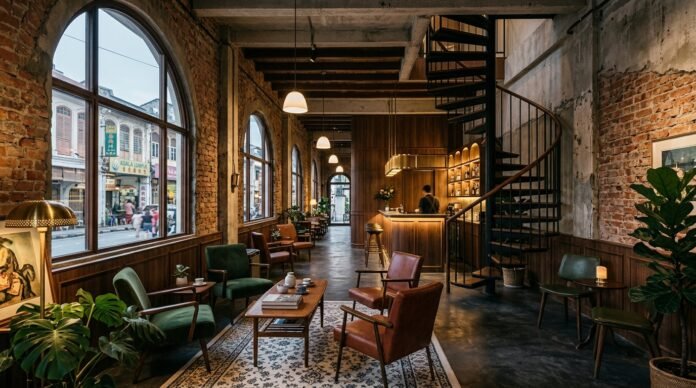

Not everyone wants a room on the 40th floor of a glass tower. If you’d rather stay somewhere with a story, Kuala Lumpur has quietly become one of the best cities in the region for boutique design hotels, and most of the good ones are clustered in the old heart of the city: the shophouses and Art Deco buildings of Chinatown and the surrounding heritage streets.
These are small, characterful, design-led places carved out of restored heritage buildings, and staying in one puts you on foot among the temples, markets, street food and old-town cafes that the tower hotels are a taxi ride from. The trade is real, though: smaller rooms, fewer facilities, and a bit of Chinatown street noise. This guide covers the best of them, and who each one actually suits.
Some links in this post are affiliate links. If you book through them, I earn a small commission at no extra cost to you. Thanks for supporting the blog.
The best boutique and heritage hotels in KL, in short
- Best overall design stay: Else Kuala Lumpur, in a restored 1930s Art Deco building.
- Best budget-friendly design hotel: MoMo’s, a buzzy heritage-shophouse social hotel.
- Best authentic Chinatown character: Tian Jing Hotel, on Jalan Sultan.
- Best heritage stay in a local neighbourhood: The Chow Kit, an Ormond Hotel.
- Best artist-inspired design: KLoe Hotel, in Bukit Bintang.
- Best luxury design hotel: The RuMa.
On prices: everything here is a flagged, indicative range. Small boutique hotels swing with demand and season, so always check current rates, and read reviews for the specific room type before you book.
Quick picks at a glance
Short on time? Start here. Each is a currently-operating boutique or design hotel with genuine character, chosen for a specific kind of traveller.
| Best for | Hotel | Style | Area | Typical from | Book |
|---|---|---|---|---|---|
| Overall design stay | Else Kuala Lumpur | Art Deco, restored | Chinatown | RM500 to RM800 | Booking / Agoda |
| Budget-friendly design | MoMo’s | Social, shophouse | Old town | RM110 to RM250 | Booking / Agoda |
| Authentic Chinatown | Tian Jing Hotel | Malaysian-Chinese | Jalan Sultan | RM150 to RM300 | Booking / Agoda |
| Heritage in a local area | The Chow Kit | Heritage-modern | Chow Kit | RM350 to RM600 | Booking / Agoda |
| Artist-inspired design | KLoe Hotel | Creative, themed | Bukit Bintang | RM300 to RM500 | Booking / Agoda |
| Luxury design | The RuMa | Craft-luxe | Bukit Bintang | RM650+ | Booking / Agoda |
Indicative lead in rates as of August 2026. KL hotel pricing swings hard with season, events and how far ahead you book, so treat these as relative positioning rather than a quote and check live rates before deciding.
As always, compare the same hotel on Booking.com and Agoda before you book, since the gap can be worth real money and Agoda often edges KL properties.
What a boutique stay gives you, and what it costs you
Boutique and heritage hotels are a different deal from the big chains, and it helps to know the trade before you book.
What you gain: character you can’t fake. A restored 1930s facade, a courtyard that used to be a rubber warehouse, interiors designed by people who clearly cared, and a location in the walkable old city rather than a tower district. You’re on foot among temples, markets, coffee shops and street food, which is the real KL most tower guests only visit.
What you give up: scale and facilities. Rooms are usually smaller, there’s rarely a big pool, gym or kids’ club, and service is personal rather than slick and round-the-clock. In Chinatown especially, you also trade a little quiet, because the streets are alive early and late, and heritage walls only block so much noise.
The upshot: book a boutique heritage hotel for the design, the neighbourhood and the story, not for resort comforts. If you want a huge pool and a spa, one of the tower hotels in our luxury guide suits you better. If you want somewhere with soul, read on.
Else Kuala Lumpur: the best overall design stay
If you book one design hotel in KL, make it Else. It occupies the restored 1930s Art Deco Lee Rubber Building right in the middle of Chinatown, and the conversion, by local studio Studio Bikin, is a masterclass in raw-meets-refined: exposed original concrete and brick set against warm timber, soft lighting and beautiful detailing. It earned a Michelin Key, has genuinely good restaurants in Raw and Yellow Fin Horse, a small rooftop pool, and a wellness streak. It feels like nowhere else in the city.
Who it’s for: design lovers, couples and repeat visitors who want a characterful base in the walkable old city, steps from Central Market, Petaling Street and the best of the Chinatown cafe scene.
The honest downside: it’s in the heart of Chinatown, so there’s street noise, and light sleepers should ask for a higher, quieter room. It’s a design hotel, not a resort, so don’t expect a big pool, sprawling gym or a kids’ club. And it’s priced at the upper end for a boutique, closer to a five-star rate than a budget stay. For what it is, most guests feel it’s worth every ringgit.
Check Else Kuala Lumpur rates on Booking.com or compare on Agoda. Our Chinatown and Petaling Street guide covers the area around it.
MoMo’s: the best budget-friendly design hotel
MoMo’s proves you don’t need a big budget for good design. Set in a heritage shophouse block in the old city, it’s a self-styled social hotel: colourful, playful interiors, a buzzy ground-floor bar and cafe, and a communal space called The Playground in place of a traditional lobby. The rooms are compact and minimalist, but the whole place has personality, and it’s genuinely affordable.
Who it’s for: younger travellers, solo visitors and design-conscious guests on a budget who want atmosphere and a social scene over space.
The honest downside: the same energy that makes it fun makes it lively. With a busy bar and regular events, it can be noisy, so it’s not the pick for an early night or anyone wanting calm. The rooms are small and pared back, deliberately so. Come for the vibe, not for lounging in your room.
Check MoMo’s rates on Booking.com or compare on Agoda.
Tian Jing Hotel: the best authentic Chinatown character
For heritage that feels rooted rather than styled, Tian Jing sits on Jalan Sultan in the thick of Chinatown, with interiors that draw on Malaysian-Chinese design and a warm, nostalgic feel. Rooms are surprisingly spacious and naturally lit for the area, some with a balcony, and its retro in-house cafe, Lim Kee, and Nanyang Lounge serve local classics like chee cheong fun and nasi lemak. It’s a lovely, unpretentious way to stay in old KL.
Who it’s for: travellers who want authentic Chinatown atmosphere and local character at a mid-range price, with easy access to temples, markets and street food on the doorstep.
The honest downside: it’s more heritage-charm than high-design or luxury, so set expectations accordingly, and being on Jalan Sultan it comes with real Chinatown noise and bustle. That immersion is exactly why many people love it, but light sleepers should request a quieter room.
Check Tian Jing rates on Booking.com or compare on Agoda.
The Chow Kit, an Ormond Hotel: the best heritage stay in a local neighbourhood
The Chow Kit is the most grown-up design hotel on this list. Its interiors, by New York studio Post Company, reference old Malaysian homes with timber floors, dimmed lighting, rich textiles and Malaysian artwork, giving it a quiet, old-money feel that’s a world away from the glossy towers. Its Kitchen and Bar leans into nostalgic local flavours, and the whole place is beautifully considered. It’s won design awards for good reason.
Who it’s for: design-minded travellers who want a refined, understated heritage stay and don’t mind being in a real, working local neighbourhood rather than a tourist zone.
The honest downside, and it’s an important one: Chow Kit is a gritty, very local district with a rough-and-ready market and a colourful past. Inside the hotel it’s a calm sanctuary, but the streets immediately around it are raw KL, not polished and pretty, and you’ll want a Grab or the nearby monorail to reach the main sights rather than a scenic stroll. If that authenticity appeals, it’s a gem. If you want to step out into postcard KL, choose a Chinatown option instead.
Check The Chow Kit rates on Booking.com or compare on Agoda.
Design hotels beyond the old city
If the design matters more to you than the heritage location, a few standout boutique hotels sit outside Chinatown, mostly around Bukit Bintang.
KLoe Hotel: the best artist-inspired design
KLoe, on Jalan Imbi near Bukit Bintang, is an art-and-music-themed boutique with creative, individually styled rooms, moody industrial-chic interiors and a good in-house coffee bar. It’s more creative-loft than heritage, and it puts you in walkable range of Bukit Bintang’s shopping and nightlife.
The honest downside: it’s a modern themed hotel, not a heritage building, so you’re here for the design and the location rather than old-KL character. The Imbi and Bukit Bintang streets around it are busy. See our Bukit Bintang guide.
Check KLoe rates on Booking.com or compare on Agoda.
The RuMa: the best luxury design hotel
If you want boutique design with full five-star service, The RuMa near Bukit Bintang and KLCC is the pick. Its interiors draw on Malaysian craft and heritage, but you also get a proper spa, a high infinity-edge pool and polished service. It’s the luxurious end of the design-stay spectrum.
The honest downside: it’s priced as a luxury hotel, and it’s a modern tower rather than a restored heritage building, so it’s design-with-comfort rather than raw old-city character. It also features in our rooftop infinity pool guide.
Check The RuMa rates on Booking.com or compare on Agoda.
Two more worth a look: WOLO Bukit Bintang, an affordable, award-winning design hotel right on the Bukit Bintang corner, and Hotel Stripes Kuala Lumpur, an Autograph Collection property near Chow Kit with a stylish rooftop pool and bar.
Which area suits you?
The three heritage-hotel districts feel quite different, so match the area to what you want.
- Chinatown and the old town is the heart of it: temples, Central Market, Petaling Street, coffee shops and the best walkable heritage. Else, MoMo’s and Tian Jing are here. Lively, atmospheric, a little noisy. See our Chinatown guide.
- Chow Kit is grittier and more local, home to The Chow Kit hotel. Great for authenticity and value, less so if you want to stroll out into pretty streets.
- Bukit Bintang is central, modern and packed with shopping and food, home to the design hotels like KLoe and The RuMa. Convenient, but not heritage. See our Bukit Bintang guide.
For the full picture of where things sit, our neighborhoods guide helps, and the whole old-town cluster is easy to reach on the MRT and LRT.
What to know before booking a heritage stay
- Ask about noise and pick your room. Heritage walls are thin and Chinatown is loud. Request a higher or interior room if you sleep lightly.
- Don’t expect resort facilities. Pools are small or absent, gyms are minimal, and there’s rarely a kids’ club. That’s the boutique trade.
- Rooms vary within the same hotel. In restored buildings, no two rooms are identical. Read reviews for your specific room type, and it’s worth paying up a category for space or a view.
- Value character over consistency. These aren’t cookie-cutter chains, so quirks come with the charm. If you need predictable and uniform, a chain suits you better.
- Location is the luxury. The real draw is stepping straight out into the old city on foot. Lean into it, and eat where the locals do.
Common mistakes
- Expecting a resort. Boutique heritage hotels trade pools and gyms for character. Book a tower hotel if facilities matter most.
- Ignoring street noise. Chinatown is alive early and late. Ask for a quieter room if you’re a light sleeper.
- Booking Chow Kit expecting pretty streets. The hotel is lovely, the neighbourhood is raw and local. Know that going in.
- Assuming all rooms are equal. In restored buildings they vary a lot. Check the specific room type and photos.
- Choosing heritage but never leaving the room. The whole point is the walkable old city. Get out and explore it on foot.
The rate you are quoted is not the rate you pay
It stings more at this end of the market, because the additions are a larger share of a smaller room rate. Tourism tax of RM10 per room per night applies to foreign passport holders only, with Malaysians and permanent residents exempt, and is charged per room rather than per person. On a RM150 room that is close to seven percent on its own.
Add 8% service tax, and a 10% service charge at the properties that levy one, though some independents in this bracket do not. A grace period for online booking platforms ended in late 2025, so the tourism tax now appears consistently however you book.
Frequently asked questions
What is the best boutique hotel in Kuala Lumpur?
For an all-round design stay, Else Kuala Lumpur is the standout, set in a beautifully restored 1930s Art Deco building in Chinatown with a Michelin Key, excellent restaurants and a rooftop pool. For a budget-friendly design hotel, MoMo’s is the pick, and for refined heritage in a local neighbourhood, The Chow Kit.
Where should I stay in Chinatown Kuala Lumpur?
Chinatown puts you within walking distance of temples, Central Market, Petaling Street and the old-town cafe scene. Else Kuala Lumpur is the top design choice, Tian Jing offers authentic character at a mid-range price, and MoMo’s is the budget-friendly social option. All come with some street noise, which is part of staying in the heart of the old city.
Are boutique hotels in KL worth it?
If you value character, design and a walkable old-city location over big facilities, yes. You get restored heritage buildings, thoughtful interiors and a real sense of place, at prices well below equivalent design hotels elsewhere in the region. The trade is smaller rooms, fewer amenities and some street noise, so they suit travellers who prize atmosphere over resort comforts.
Is Else Kuala Lumpur worth it?
For design lovers, yes. It’s one of the most distinctive hotels in the city, set in a restored Art Deco building with raw-meets-refined interiors, a Michelin Key, good dining and a Chinatown location you can explore on foot. Just go in knowing it’s a design hotel rather than a resort, and that there’s street noise, so request a higher, quieter room if you sleep lightly.
Which boutique hotels in KL are good value?
MoMo’s and Tian Jing both deliver design and heritage character at mid-range or budget prices, and WOLO Bukit Bintang is an affordable, award-winning design hotel. The Chow Kit is also reasonable for the quality of its design, thanks to its more local neighbourhood. All offer far more character per ringgit than a standard chain hotel.
Is Chinatown a good area to stay in KL?
Yes, especially for first-time visitors and anyone who wants to be among the temples, markets and street food of the old city, all walkable and well connected by rail. The main trade-off is noise, since Chinatown is busy and lively from early until late, so pick a quieter room and embrace the atmosphere.

