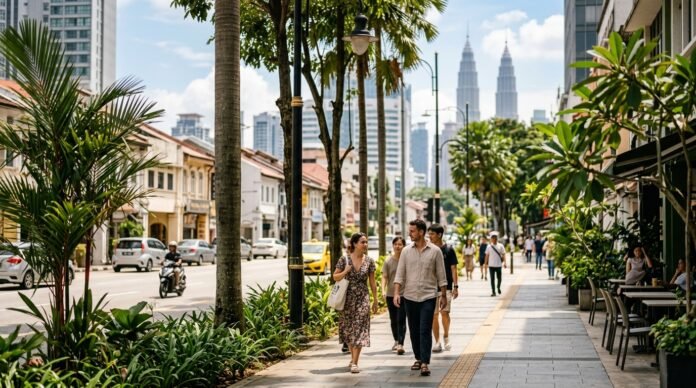

The short, honest answer is yes. After more than a decade living here I can tell you that Kuala Lumpur is a safe and easy city for visitors, and the everyday reality is far calmer than nervous first timers expect. That does not mean switching your brain off, since like any big city it has petty crime and a few scams worth knowing. So this is the realistic picture: what is genuinely worth being aware of, and the simple habits that keep almost everyone trouble free.
Some links below are affiliate links. If you buy through them I earn a small commission at no extra cost to you.
The short answer
KL is one of the more comfortable major Asian cities for tourists. Violent crime against visitors is uncommon, the main thing to watch is ordinary opportunistic theft like bag snatching and pickpocketing in crowds, and the usual sensible precautions handle it. Use Grab instead of unmarked taxis, keep your bag secured in busy areas, and you will very likely have a completely smooth trip. Solo travelers, including solo women, generally find KL straightforward.
How safe is KL, really?
Compared with many big cities worldwide, KL is on the safer end for tourists, and most visitors come and go without any incident at all. The city is modern, well policed in the tourist areas, and used to international visitors, and English is widely spoken if you ever need help. The risks that exist are mostly the everyday, opportunistic kind found in any busy city, rather than anything dramatic. The honest takeaway is to be normally streetwise, not anxious.
Safest areas for tourists in KL
The areas tourists actually spend time in are all comfortably safe, day and night:
- Bukit Bintang, busy and well-policed, with tourist police around the main streets.
- KLCC, polished and very safe around the towers, park, and mall.
- Chinatown, lively and fine; just keep the usual eye on bags in the market crowds.
- Bangsar and TTDI, relaxed, residential, expat-favoured areas.
- KL Sentral, the transport hub, well-trafficked and convenient for early flights.
Like any big city, some outer suburbs are quieter and less relevant late at night, but visitors rarely have any reason to be there. Stick to the areas above and you will not think twice about safety.
Are the trains safe?
Yes. The MRT, LRT, Monorail, and KLIA Ekspres are clean, modern, and used by locals, students, and tourists alike, among the easiest and safest ways to get around. Keep a normal eye on your belongings in rush-hour crowds, and note that the front carriage of LRT and MRT trains is reserved for women during the day if you prefer it. For the full how-to see the KL MRT and LRT guide.
The real risk: petty theft
If anything happens to a tourist in KL, it is most likely to be this, so it is the one thing worth a little attention. Bag snatching and pickpocketing happen in crowded places, busy markets, packed trains, and tourist hotspots, and occasionally from passing motorcycles. None of it is common, but a few habits cut the odds to almost nothing: carry your bag on the side away from the road and in front of you in crowds, keep your phone in a zipped pocket rather than loose, do not leave valuables on a cafe table, and use the hotel safe for your passport. Standard city sense, nothing special to KL.
Scams to know about
KL has a small number of low key tourist scams, none of them dangerous, just annoying if you are caught out. The main one is the metered taxi that would rather not use the meter or quotes an inflated flat fare, which you avoid almost entirely by using Grab, where the price is fixed and shown before you book. Be wary of anyone approaching you unprompted at the airport or a mall offering a ride or a deal, and use ATMs attached to banks rather than standalone machines in quiet spots. For the detail see taxi scams in KL and how ride hailing protects you in Grab in Malaysia.
Is KL safe at night?
Generally yes, and the city is comfortably busy in the evening, which is when the heat eases and KL is at its best. The central and tourist areas stay lively and well populated late, and walking around Bukit Bintang, KLCC, or a night market in the evening is normal and fine. As anywhere, stick to busy, well lit streets, take a Grab rather than walking long distances late at night, and keep the usual awareness in quieter back streets. Nothing about KL after dark should put you off.
Is KL safe for solo travelers and solo women?
Yes, KL is a comfortable city for solo travelers, including solo women, and many visit alone without issue. The usual awareness any city calls for applies: stay aware in crowds, use Grab at night, and trust your instincts. Malaysia is a majority Muslim country, so dressing a little more modestly, especially at religious sites and in more conservative areas, is respectful and draws less attention, though KL itself is cosmopolitan and relaxed. For the fuller picture see KL for solo female travelers.
A few practical habits that solo women travellers find useful here:
- Use Grab rather than walking alone late at night, it is cheap and removes most of the awkward situations.
- Use the women-only train carriage (the front carriage on LRT and MRT) during the day if you prefer.
- Stick to the busy, well-lit tourist areas at night and skip isolated parks after dark.
- Dress as you normally would in the tourist districts; cover shoulders and knees at mosques and temples.
- Catcalling and harassment are uncommon but, as anywhere, not impossible; a firm response and moving to a busy spot resolves the rare instance.
Health and other practical safety
Beyond crime, the everyday stuff is easy. Tap water is treated but most people drink filtered or bottled water. Street food at busy stalls is safe and one of the best things about the city, the crowd being the quality check. The heat and humidity are the most likely thing to catch you out, so hydrate and pace yourself. Healthcare is good, with quality private hospitals, and travel insurance is worth having for any trip to cover the unexpected.
Worth having: travel insurance for peace of mind, covering medical care and trip disruption. SafetyWing suits long term travelers and HeyMondo is a solid choice for shorter trips.
Simple habits that keep you safe
To pull it together, the short list: use Grab rather than street taxis, keep your bag secure and in front of you in crowds, use bank ATMs, stay on busy streets at night and Grab longer distances, keep your passport in the hotel safe, dress respectfully at religious sites, and stay hydrated in the heat. Do these without thinking and the odds of any trouble are very low.
Emergency numbers and what to do
Worth saving before you go, though you will very likely never need them:
- 999, the all-in-one emergency line for police, ambulance, and fire (Malaysia’s MERS 999).
- 112, works from a mobile even with no SIM or credit, and routes to 999, handy the moment you land before you sort out a local number.
- Tourist Police, a dedicated force stationed around Bukit Bintang, KLCC, and Chinatown (look for the white helmets and “Tourist Police” badge) for lost documents, theft reports, and visitor help.
If something does go wrong, file a police report at the nearest station (you will need one for any insurance claim), and contact your embassy for lost passports. This is also exactly where decent travel insurance earns its keep.
Frequently asked questions
Is Kuala Lumpur safe for tourists?
Yes. KL is a safe and easy city for visitors, with violent crime against tourists uncommon. The main risk is ordinary petty theft like pickpocketing in crowds, which simple precautions handle. Use Grab over unmarked taxis and keep your bag secure, and most trips are completely smooth.
Is Kuala Lumpur safe at night?
Generally yes. The central and tourist areas stay busy and lively in the evening, which is the best time to be out once the heat drops. Stick to well lit, busy streets and take a Grab for longer distances late at night.
Is KL safe for solo female travelers?
Yes, KL is comfortable for solo women, and many travel here alone without issue. Apply the usual city awareness, use Grab at night, and dress a little more modestly at religious sites and in conservative areas out of respect.
What are the main scams in Kuala Lumpur?
Mostly minor: taxi drivers avoiding the meter or quoting inflated fares, which Grab avoids entirely, and the occasional unsolicited approach offering a ride or deal. Use Grab, bank ATMs, and a healthy wariness of strangers approaching you unprompted.
Is the food and water safe in KL?
Street food at busy stalls is safe and excellent. Tap water is treated but most people, locals included, drink filtered or bottled water. The heat is more likely to affect you than the food, so stay hydrated.
Plan the rest of your trip
- Kuala Lumpur travel guide
- KL for solo female travelers
- Grab in Malaysia
- Taxi scams in KL
- Where to stay in Kuala Lumpur
Travel with peace of mind
Sort travel insurance before you go: SafetyWing for long term travelers or HeyMondo for shorter trips.
Official & useful resources

