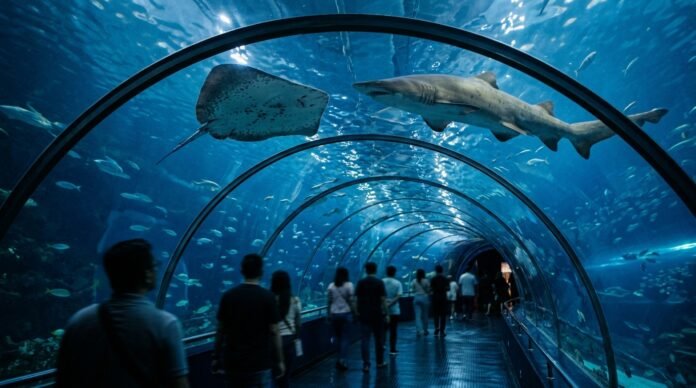

Aquaria KLCC is one of the most popular paid attractions in Kuala Lumpur, sitting right by the Petronas Towers, and it’s not cheap, especially for foreign visitors. So the honest question is: is it actually worth it? The short answer is yes, if you have kids, it’s raining, or you love aquariums, and you go at the right time. If you’re a fast solo traveller expecting a vast world-class aquarium, you might find it a little small for the price.
Here’s an honest look at what you get, what it costs, the genuinely good bits, the crowds to avoid, and how to make sure it’s worth your ringgit.
Some links in this post are affiliate links. If you book through them, I earn a small commission at no extra cost to you. Thanks for supporting the blog.
The verdict, up front
- Worth it if: you’re travelling with children, you want an indoor, air-conditioned activity on a hot or rainy day, or you enjoy aquariums.
- Maybe skip if: you’re a fast-moving solo traveller on a tight budget, or you’re visiting on a busy weekend and hate crowds.
- Price: RM82 on weekdays and about RM87 at weekends for a non-Malaysian adult as of October 2026, less for children and for Malaysians. Indicative, so check current rates.
- Hours: daily 10am to 8pm, last entry around 7pm.
- Time needed: about 1.5 to 2 hours.
- The highlight: the 90-metre underwater tunnel.
On prices and times: these are indicative and change. Confirm before booking, and check the feeding-session schedule for the day.
What is Aquaria KLCC?
Aquaria KLCC is a large aquarium spread across the concourse level of the Kuala Lumpur Convention Centre, right next to KLCC Park and about a 10-minute walk from the Petronas Towers. It holds more than 5,000 land and aquatic creatures across around 150 species, laid out as a self-guided, one-way route through themed zones, from an Amazon flooded forest to a shipwreck reef to the big ocean tank. It’s regularly rated among the better aquariums in Asia, and it drew well over a million visitors in a recent year, so it’s a proven crowd-pleaser.
The highlight: the 90-metre underwater tunnel
If Aquaria has one thing that justifies the ticket, it’s the Living Ocean tunnel. You stand on a slow moving walkway and glide through a 90-metre transparent tunnel while green sea turtles, sand tiger sharks and giant stingrays cruise directly over your head. It genuinely feels like a diver’s-eye view without getting wet, and it’s the bit everyone remembers. It’s also the most photogenic spot in the building, lit in ambient blue, so keep your phone ready and skip the flash.
Good to know: because it’s a moving walkway, you glide through at a set pace, but you can step off to the side and walk back through again if you want a second, slower look. Most people do.
What else is inside
Beyond the tunnel, the route winds through several zones with genuine variety.
- The touch pool (Gene Pool): a hands-on tank where you can gently touch starfish, sea cucumbers and small bamboo sharks. A big hit with children.
- Themed zones: a flooded Amazon forest with piranhas, a shipwreck reef, a jellyfish display, and land creatures including reptiles, so it isn’t only fish.
- Feeding sessions: the real value-add, spread through the day.
Feeding session times
Timing your visit around the feeding sessions makes it much more interesting, especially for kids. The schedule runs through the day, and the star turn is the shark and ray feeding inside the underwater tunnel. Typical times look like this, though they can change, so check the board when you arrive:
- Touch pool feeding: late morning, around 10:45am.
- Living Ocean shark feeding (in the tunnel): around 12:30pm and 3:30pm.
- Flooded Forest and Coastal feedings: late afternoon, around 5:30pm and 5:45pm.
Arrive 5 to 10 minutes before a session to get a spot at the rail. If you can only catch one, make it the tunnel shark feeding.
Upgrades
For a closer encounter, Aquaria offers add-ons like a cage-diving experience with the sharks, and occasional sleepovers. These cost more and need booking ahead, but they’re memorable for older kids and enthusiasts.
Tickets, prices and booking
Prices change and there are separate rates for Malaysians and foreign visitors, so treat these as indicative.
- Non-Malaysian adult: RM82 on weekdays and about RM87 at weekends, with children (ages 3 to 12) a little less. Under-threes go free.
- Malaysian rates (MyKad): noticeably cheaper, so bring ID.
- Peak pricing: weekends and public holidays can cost a bit more than weekdays.
- Combo tickets: you can bundle Aquaria with the Petronas Towers, which suits a KLCC half-day if you were doing both anyway.
Should you book online?
Usually yes. Booking through a platform like Klook or GetYourGuide is often a little cheaper than the gate price and lets you skip the ticket-buying counter. One honest caveat: online tickets skip the counter queue, but not the entry queue itself, so on a busy day you may still wait to get in. The fix for that is timing, which I’ll come to.
Opening hours
Aquaria KLCC is open daily, including public holidays, from 10am to 8pm, with last entry around 7pm. Allow at least 1.5 hours inside, or up to 2 if you want to catch a couple of feeding sessions and take your time in the tunnel.
So, is it worth it?
Here’s my honest take, with both sides.
What’s genuinely good: the 90-metre tunnel is a real highlight and worth the visit on its own, the place is clean and well organised, the touch pool and feeding sessions are great for kids, and the central location means you can fold it into a KLCC afternoon easily. As an indoor, air-conditioned activity it’s one of the best rainy-day options in the city.
What’s fair to flag: it isn’t cheap, especially for foreign visitors at RM82 to RM87 a head, and fast walkers can get through it in about 90 minutes, which some feel is short for the price. It also gets very crowded at peak times. On busy weekends and school holidays there can be a long queue to get in, and inside it can be shoulder-to-shoulder at the popular tanks, which takes the shine off.
The verdict: for families with children, on a hot or rainy afternoon, or for anyone who enjoys aquariums, it’s worth it, provided you go at a sensible time. For a solo traveller on a tight budget who has seen a few big aquariums already, it may feel a bit pricey and compact. The single biggest factor in whether you enjoy it isn’t the aquarium itself, it’s the crowds, so timing matters more than anything.
How to make it worth it
- Go on a weekday morning. Right after the 10am opening on a weekday is quietest, with the shortest queues and room to actually see the tanks. Avoid weekends and school holidays if you can.
- Time the feeding sessions. Build your visit around the tunnel shark feeding, and you get a show as well as the exhibits.
- Book online. Slightly cheaper and skips the ticket counter.
- Walk the tunnel twice. Step off, loop back, and go through the moving walkway again when it’s quieter.
- Pair it with the towers. It’s a natural rainy-afternoon partner to the rest of KLCC.
Great for rainy days and kids
Where Aquaria really earns its place is as a wet-weather and family option. KL gets sudden, heavy afternoon downpours, especially in the monsoon months, and Aquaria is a completely indoor, air-conditioned way to spend a couple of happy hours when the sky opens. The touch pool, the feeding sessions and the tunnel keep children genuinely engaged, and it’s all on one level with prams and wheelchairs in mind. If you’re travelling with kids, it’s one of the easiest wins in the city.
For more ideas along these lines, see our guides to things to do in KL when it rains and Kuala Lumpur with kids.
Getting there
Aquaria KLCC is on the concourse level of the Kuala Lumpur Convention Centre, next to KLCC Park and about a 10-minute covered walk from the Petronas Towers. Take the LRT to KLCC station, which comes up inside Suria KLCC, then follow the signs through the park or the walkway. A Grab drops you at the Convention Centre. Our KL rail guide has the details, and while you’re here the free KLCC Park and fountain show make a perfect no-cost pairing.
Frequently asked questions
Is Aquaria KLCC worth visiting?
For families with children, on a hot or rainy day, or if you enjoy aquariums, yes. The 90-metre underwater tunnel is a genuine highlight, and the touch pool and feeding sessions are great for kids. It’s less compelling for a fast-moving solo traveller on a tight budget, since it’s a bit pricey for foreigners and can be finished in about 90 minutes. Going on a quiet weekday morning makes the biggest difference.
How much are Aquaria KLCC tickets?
A non-Malaysian adult ticket is RM82 on weekdays and about RM87 at weekends and public holidays as of October 2026, with children aged 3 to 12 a little cheaper and under-threes free. Malaysians pay less with a MyKad, and weekends and public holidays can cost slightly more. Booking online is often a touch cheaper than the gate and lets you skip the ticket counter. Prices change, so confirm before you go.
How long do you need at Aquaria KLCC?
Most visitors spend about 1.5 to 2 hours, which covers the themed zones, the touch pool and a slow pass through the underwater tunnel. Fast walkers can do it in around 90 minutes. If you want to catch one or two feeding sessions, allow the full two hours and time your arrival around the schedule.
What time are the feeding sessions at Aquaria KLCC?
Feeding sessions run through the day across different zones, with the standout being the shark and ray feeding inside the underwater tunnel, typically around 12:30pm and 3:30pm. There are usually touch-pool and other feedings from late morning to late afternoon. Times can change, so check the board on arrival, and get to the rail 5 to 10 minutes early for a good view.
Is Aquaria KLCC good for a rainy day?
Yes, it’s one of the best rainy-day options in Kuala Lumpur. It’s entirely indoor and air-conditioned, takes 1.5 to 2 hours, and keeps children engaged with the tunnel, touch pool and feedings. Since KL’s rain tends to arrive in heavy afternoon bursts, it’s an easy plan to duck into when the weather turns.
Should I book Aquaria KLCC tickets in advance?
It’s worth booking online, as it’s often slightly cheaper than the gate and skips the ticket-buying counter. Note that it skips the counter, not the entry queue, so at busy times you may still wait to get in. The best way to avoid queues altogether is to arrive on a weekday morning soon after opening.

