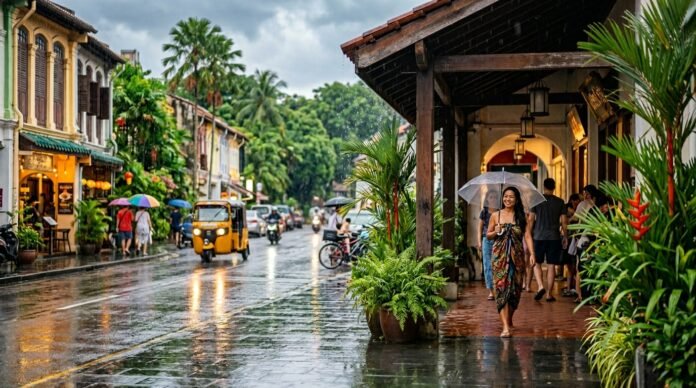

Short version: do not let the rainy season put you off KL. The rain here is rarely the all-day grey washout people imagine, it is usually a dramatic afternoon or evening thunderstorm that clears as fast as it arrives. Plenty of travellers visit in the wetter months and barely have a day disrupted. Here is what to actually expect, and why it can even work in your favour.
The short version
- KL has no true “dry season”, it is tropical, so short rain is possible any month. The differences between months are real but smaller than most expect.
- November is the wettest on average; June to August is the driest stretch.
- Rain is typically a short, heavy afternoon/evening downpour, not all day. Mornings are often clear.
- It is easy to work around: plan outdoor sights for mornings, malls/museums/food for the afternoon storm.
- Upside: wetter months can mean fewer crowds and lower hotel rates.
What “rainy season” actually means in KL
This is the thing to internalise: KL’s rain is not the steady, all-day drizzle of a temperate climate. It tends to build through a hot, humid afternoon and then break in a spectacular tropical thunderstorm, intense for half an hour to a couple of hours, then gone, often leaving a fresher, cooler evening behind. You will get wet if you are caught out in it, but you will not lose a whole day. Mornings, in particular, are frequently bright and clear even in the wetter months. For the full month-by-month picture, see our guide to the best time to visit KL.
When is the rainy season?
KL gets rain year-round, but there are wetter and drier stretches. The wettest period centres on the later part of the year, with November the wettest month on average and the surrounding months damp. The driest window is roughly June to August, though even then an afternoon storm is possible. The honest truth, and we say this on the best-time guide too, is that the gap between “wet” and “dry” months is narrower than travellers fear; there is no month you should rule out.
Month by month, roughly
A rough guide to the relative rainfall pattern (it is tropical, so all months get some rain; this is about the odds, not guarantees):
| Month | Rainfall | Verdict for visitors |
|---|---|---|
| January | Moderate | Fine |
| February | Lower | Good |
| March | Higher | Wetter, still fine |
| April | Higher | Expect afternoon storms |
| May | Moderate | Fine |
| June | Lower (driest) | Excellent |
| July | Lower | Excellent |
| August | Lower | Excellent |
| September | Moderate | Fine |
| October | Higher | Wet |
| November | Highest | Wettest month |
| December | Higher | Wet |
The two wetter stretches line up loosely with the monsoon influence: roughly March to April, and October to December, with November the clear peak. June to August is the driest, sunniest window. Even so, the gap is narrower than it looks on paper.
What a rainy-season day actually looks like
A typical wet-season day runs hot and bright into the early afternoon, around 32C and humid, then clouds build and a heavy thunderstorm rolls through for anything from half an hour to a couple of hours, often in the late afternoon or evening, before clearing to a fresher night. You plan around that one window, not around a grey all-day drizzle.
KL does not have a monsoon season in the way you are probably imagining
This is the single most useful thing to understand, and almost every guide gets it slightly wrong. When people worry about visiting Malaysia in monsoon season, they are usually thinking of the east coast, where the northeast monsoon genuinely closes things down. Island resorts on the Perhentians and Tioman shut for months, boats stop running, and the season is a real constraint.
Kuala Lumpur is not that. It sits inland on the west side of the peninsula, sheltered by the Titiwangsa mountain range, which takes the edge off both monsoons before they reach the city. Nothing in KL closes for the season. No attraction shuts, no transport stops, no hotel boards up its windows. The city carries on exactly as normal, and the difference between a wet month and a dry month is measured in how often you duck indoors for an hour, not whether your trip works.
The second thing almost nobody explains: the wettest stretches for KL are not the monsoons themselves but the inter-monsoon transition periods between them, roughly around April and again around October, when thunderstorm activity peaks. So a guide telling you to avoid the northeast monsoon is pointing you at the wrong months for this particular city.
Why every guide gives you a different answer
If you have already searched this, you will have noticed that the answers contradict each other. One site says avoid October to January, another says March and April, a third says November to January, a fourth recommends the exact months a fifth tells you to avoid. It is genuinely confusing, and it is not your fault.
There are three reasons for it:
- Malaysia has two coasts with opposite seasons. Much of what you read is written about Malaysia as a whole, and the east coast pattern is the reverse of the west. Advice written for Langkawi or the Perhentians does not transfer to KL.
- There are four phases, not two. The peninsula moves through two monsoons and two inter-monsoon transitions each year. Guides that describe only a wet season and a dry season are compressing four phases into two and losing the detail that matters.
- The differences are genuinely small in KL. Every month here is warm, humid and sees rain. When the gap between the wettest and driest month is a matter of degree rather than kind, writers reach different conclusions from the same data.
The practical answer: for reliably drier weather, the middle of the year is the safer bet, and the transition months around April and October are the wettest. But no month is a bad month to come, which is why this page is about whether the rain should change your plans rather than which month to pick. If you are choosing dates from scratch, our best time to visit guide works through the calendar properly, including festivals and crowds.
Is it worth visiting in the rainy season?
Yes, and there are genuine perks. Because so many travellers wrongly avoid the wetter months, you can find thinner crowds at the big sights and softer hotel prices. The rain rarely costs you more than an afternoon, which you would often want to spend out of the midday heat indoors anyway. The one real watch-out is flash flooding in heavy downpours, which can briefly snarl traffic, another reason the rail network beats sitting in a Grab during a storm.
So which months should you pick?
If rain is the only thing you are weighing, the middle of the year is the safer bet and the transition months around April and October are the wettest. But rain is rarely the deciding factor for KL, because nothing here closes and the showers are short. Crowds, prices and festivals move your experience far more than rainfall does.
Rather than repeat it here, our best time to visit Kuala Lumpur guide works through the full calendar: month by month, the festival dates that matter, school-holiday crowd spikes, and which months suit which traveller. Use this page to decide whether rain should put you off, and that one to pick your dates.
Day trips in the rainy season
Rain changes day trips more than it changes the city. In KL you can duck into a mall. An hour outside it, a storm can close a waterfall, cancel a boat or flood a trail. The same pattern helps, though: mornings are usually dry and storms tend to arrive in the afternoon, so start early and plan to be indoors or heading home by mid afternoon.
Day trips that cope well with rain:
- Genting Highlands. There are indoor attractions and the SkyAvenue mall at the top, and the SkyWorlds Rainy Day Guarantee gives a free return ticket, valid for 12 months, if it rains for an hour or more while you are there. Register your ticket in the SkyWorlds app first. See our Genting guide.
- Ipoh. The ETS train takes two to two and a half hours, and a day in Ipoh is mostly about food, which works in any weather. See our Ipoh guide.
- Melaka. Do the open heritage sights in the morning and save a long Nyonya lunch for when the afternoon storm arrives. See our Melaka guide.
Day trips to rethink after heavy rain:
- Waterfalls. The Kanching waterfalls are prone to flash floods after heavy rain. If it has poured overnight, pick something else.
- The Kuala Selangor fireflies. Rain spoils the show, and the boats are best on a dark, dry night. See our fireflies guide.
- The Cameron Highlands. The wettest stretch runs roughly November to February, when the trails suffer most. See our Cameron Highlands guide.
- The east coast and Taman Negara. From around November to February the northeast monsoon closes the east coast islands and brings the highest flood risk to Taman Negara. Go west instead, as our beaches near KL guide explains.
What to pack
Not much extra. A compact umbrella or a light rain jacket, quick-dry clothing and sandals or shoes you do not mind getting wet, and a small dry bag or zip-lock for your phone and documents. Skip heavy rain gear, it is hot, and you would rather duck into a cafe than sweat under a raincoat. For the full list see what to pack for Kuala Lumpur.
Frequently asked questions
When is the rainy season in Kuala Lumpur?
KL gets rain year-round, but the wettest stretch is late in the year, with November the wettest month on average. June to August is generally the driest window. Even so, the difference between months is smaller than most travellers expect.
Is it worth visiting KL in the rainy season?
Yes. The rain is usually a short afternoon storm, not an all-day washout, and the wetter months often bring thinner crowds and lower hotel prices. With a little planning around the afternoons, it barely affects a trip.
Does it rain all day in KL?
Rarely. The typical pattern is a hot, humid build-up and then a heavy thunderstorm in the afternoon or evening that passes within an hour or two. Mornings are often clear, even in wetter months.
What should I do in KL when it rains?
Plenty, malls, museums, indoor markets, cafes, and the aquarium are all good rainy-afternoon options. See our dedicated guide to things to do in KL when it rains.
Can you do day trips from KL in the rainy season?
Yes. Start early, since storms usually arrive in the afternoon, and choose trips with indoor options, such as Genting Highlands, Ipoh or Melaka. Avoid waterfalls after heavy rain, and from around November to February skip the east coast islands and Taman Negara.
Explore more
- Best time to visit Kuala Lumpur
- Things to do in KL when it rains
- What to pack for Kuala Lumpur
- Kuala Lumpur travel guide
Official & useful resources

