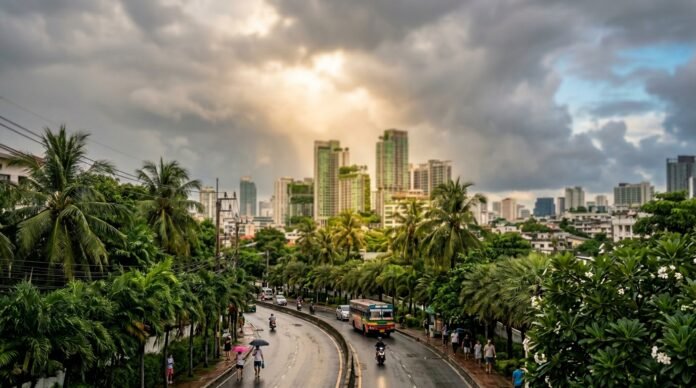

Here is the honest answer no glossy guide quite gives you: there is no bad time to visit Kuala Lumpur. It sits near the equator, so it is hot and humid all year with rain possible in any month, and there is no cool or dry season the way temperate countries have one. What changes is how much it rains, not whether you can have a great trip. So go whenever suits your schedule, and read on for the nuance that actually matters.
The short answer
KL is a year round destination. Expect hot, humid days around the low thirties Celsius whatever month you come. The drier odds are usually mid year, and the wetter stretches tend to fall in the inter monsoon periods, but even then rain is mostly short heavy afternoon downpours, not all day grey. The practical move is to plan indoor options for the afternoon and not reorganise your trip around the weather.
The truth about KL weather
KL has an equatorial climate, which in plain terms means warm to hot and humid every single day of the year, typically in the low thirties Celsius by day and rarely dropping much at night. There is no winter, no real dry season, and no cold snap. Humidity is the thing first timers underestimate, and it makes the heat feel stronger, so pacing yourself and hydrating matters more than which month you pick.
Rain comes year round, usually as dramatic but short afternoon or evening thunderstorms that clear quickly, rather than days of drizzle. That pattern is actually convenient: you sightsee in the morning, take cover for the downpour over lunch or in a mall, and you are back out by late afternoon. The storms tend to arrive fast, dump a huge amount of rain for thirty to ninety minutes, then leave blue skies behind, which is why locals rarely step out without a compact umbrella even in the drier months.
The wetter and drier stretches
While rain is possible any time, there are tendencies worth knowing. The middle of the year is generally a little drier and a popular window, while the inter monsoon periods, which fall around the turn of spring and again later in the year, tend to bring more rain. Even in the wetter stretches the rain is typically concentrated in afternoon storms rather than constant, so a trip then is far from washed out. The honest advice is that the difference is not big enough to reorganise your travel around. For more on visiting in the rain see KL in the rainy season and things to do in KL when it rains.
Kuala Lumpur month by month
For reference, here is the rough monthly pattern. Note the verdict column: there is genuinely no bad month, only relative nuance, since the rain falls in short afternoon bursts whatever the season. This is the Kuala Lumpur picture. The east coast runs on an opposite monsoon, so for a trip beyond the capital see our month by month guide to Malaysian weather, and check the public holidays that affect crowds.
| Month | Pattern | Verdict |
|---|---|---|
| January | Drier side of the wet season, slightly fresher | Good |
| February | One of the drier months; Chinese New Year atmosphere | Very good |
| March | Inter-monsoon, wetter | Fine |
| April | Inter-monsoon, among the wetter months | Fine |
| May | Drying out | Good |
| June | Often the driest month | Excellent |
| July | Drier stretch continues | Excellent |
| August | Still relatively dry | Excellent |
| September | Mixed, gradually wetter | Good |
| October | Inter-monsoon, wetter | Fine |
| November | Wettest month on average | Still fine |
| December | Wet but festive, holiday season | Good |

Festivals and events: the real reason to time a trip
If anything should influence your dates, it is culture rather than weather. Malaysia’s calendar is rich with festivals, and they affect both the atmosphere and the practicalities. Chinese New Year brings decorations, crowds, and some business closures, and dates shift each year. Ramadan changes the daytime rhythm, with the wonderful Ramadan bazaars in the evenings but quieter daytime dining, followed by the celebrations of Hari Raya. Deepavali lights up Little India. Because these dates move every year, check the current calendar before you book if you want to catch or avoid a particular festival.
When to visit by traveler type
A few quick steers. For the driest odds and general sightseeing, aim for the middle of the year, but do not stress about it. For festivals and atmosphere, time your trip to a celebration you want to see, checking the shifting dates. For fewer crowds and lower prices, avoid the big regional holiday peaks. And for a layover or a fixed work trip, just come whenever, since KL handles any month fine. For how long to stay once you have picked your dates see how many days in KL.
| If you care most about | Best time |
|---|---|
| Driest odds and sightseeing | June to August |
| Slightly fresher, drier wet-season months | January to February |
| Festivals and atmosphere | Depends on the year (check dates) |
| Fewer crowds and lower prices | Outside regional holiday peaks |
| Food and shopping | Year-round |
| A first visit or a layover | Any month |
What matters more than the month
The single most useful planning habit for KL is not picking the perfect month, it is building flexibility into each day. Plan outdoor sights for the morning when it is cooler and drier, keep an indoor backup (a mall, a museum, a long lunch) for the afternoon storm window, carry a small umbrella, and dress for heat and aggressive air conditioning both. Do that and the weather becomes a non issue in any month. For the full planning picture see the Kuala Lumpur travel guide.
Frequently asked questions
What is the best time to visit Kuala Lumpur?
Any time, since KL is hot and humid year round with no real bad season. The middle of the year tends to be a little drier, but rain in other months is mostly short afternoon storms, so go whenever suits your schedule and plan indoor options for the afternoon.
What is the rainy season in Kuala Lumpur?
Rain is possible year round, with wetter tendencies in the inter monsoon periods. Even then it usually comes as short heavy afternoon downpours that clear quickly, rather than all day rain, so it does not ruin a trip.
How hot is Kuala Lumpur?
Hot and humid all year, typically in the low thirties Celsius by day, with high humidity that makes it feel warmer. There is no cool season, so pack for heat whatever month you visit and stay hydrated.
Is it worth visiting KL in the rainy season?
Yes. The rain is mostly concentrated in short afternoon storms, so you can still sightsee in the mornings and evenings and take cover during the downpour. Prices and crowds can also be a little easier.
Should I plan my trip around a festival?
If you want to, since festivals like Chinese New Year, Ramadan and Hari Raya, and Deepavali add a lot of atmosphere. Their dates shift each year, so check the current calendar before booking, and note that some bring closures and crowds.
What is the cheapest month to visit Kuala Lumpur?
There is no single cheap month, but prices tend to be lower outside the big regional holiday peaks (Chinese New Year, Hari Raya, and the year-end school holidays). The wetter inter-monsoon stretches around March to April and October to November can also see softer hotel rates.
What month has the least rain in Kuala Lumpur?
June is often the driest month, and the June to August stretch is generally the driest window, though rain is still possible. November is the wettest on average. The differences are real but smaller than most travellers expect.
Is Kuala Lumpur too hot to visit?
No, but it is consistently hot and humid, typically low thirties Celsius year-round. Plan outdoor sights for the morning, use the air-conditioned malls and trains in the afternoon, and hydrate. The heat is very manageable if you pace yourself.
Can I visit Kuala Lumpur during Ramadan?
Yes. Many restaurants stay open for tourists, though some local eateries close or adjust hours during fasting daylight, and the Ramadan bazaars selling food before sunset are a genuine highlight. Be respectful around those fasting. Dates shift each year, so check the calendar.
Plan the rest of your trip
- Kuala Lumpur travel guide
- How many days in KL
- KL in the rainy season
- Things to do in KL when it rains
- Where to stay in Kuala Lumpur
Ready to set your dates?
Once you have picked when to go, plan the trip with how many days you need and where to stay.
Official & useful resources

