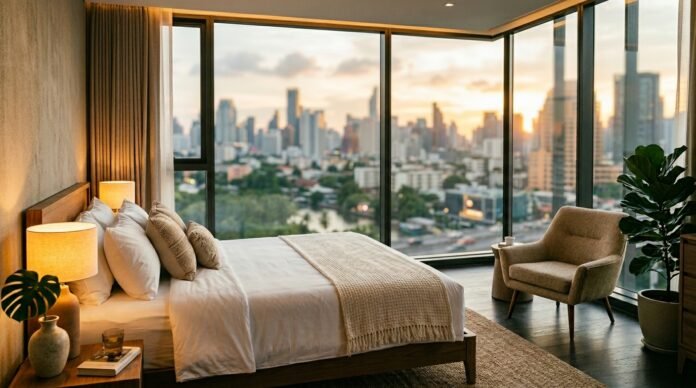

Picking where to stay in Kuala Lumpur is really one decision dressed up as a hundred. The city sprawls, the train map looks busier than it is, and almost every area calls itself “central.” The truth is simpler. Four or five neighborhoods cover the needs of almost every visitor, and once you know which one matches your trip, the hotel choice gets easy. This guide walks through each area the way I would explain it to someone landing next week, with the honest pros, the things nobody mentions, and who each place actually suits.
Some links below are affiliate links. If you book through them I earn a small commission at no extra cost to you. I only point you toward places I would send a friend.
The short version
If you want one answer, here it is. First time in KL and you want everything walkable, book Bukit Bintang. Want the skyline, the Petronas Towers on your doorstep, and a quieter polish, book KLCC. Traveling on a budget or chasing heritage and street food, book Chinatown. Flying in late or out early, or you plan to day trip a lot, book near KL Sentral. Staying a week or longer, or traveling with kids, look at Bangsar, Mont Kiara, or a serviced apartment.

Why you can trust this guide
I have lived in Kuala Lumpur for more than ten years, so this is not a list assembled from other people’s reviews. I have stayed in hotels across the city and moved around a few of its neighborhoods over that time. Where I have personally stayed somewhere I will say so. Where I am going off the area’s reputation rather than my own night there, I will say that too.
Quick picks by traveler
Scan this, find the row that sounds like you, and jump to that section below. The nightly bands are indicative starting points in ringgit, not live quotes, so always check the current rate before you book.
| Best for | Area | Why it wins | Rough nightly band | Book |
|---|---|---|---|---|
| First timers | Bukit Bintang | Walkable, central, food and shopping at the door | RM 280 to 550 (about $65 to $125) | Booking.com / Agoda |
| Luxury and skyline | KLCC | Petronas views, polished hotels, calmer streets | RM 700 to 1,600 plus (about $160 to $365) | Booking.com / Agoda |
| Budget and heritage | Chinatown | Cheapest beds, old KL character, great hawker food | RM 90 to 220 (about $20 to $50) | Booking.com / Agoda |
| Transit and airport | KL Sentral | KLIA Ekspres terminus, every train line meets here | RM 250 to 500 (about $57 to $115) | Booking.com / Agoda |
| Families and long stays | Mont Kiara / Bangsar | Space, residential calm, serviced apartments | RM 220 to 480 (about $50 to $110) | Mont Kiara: Booking.com / Agoda Bangsar: Booking.com / Agoda |
What your money actually buys in KL
This is the single best thing about booking a hotel in Kuala Lumpur, and the reason people end up staying somewhere far nicer than they planned. KL is one of the cheapest major Asian cities for quality accommodation. A five-star room here costs a fraction of the equivalent in Singapore, Hong Kong or Tokyo, and the properties are often newer.
| Tier | What you get | The catch |
|---|---|---|
| Hostel and guesthouse | Clean dorm or a basic private room, usually in Chinatown or Bukit Bintang. Air-conditioned. | Older buildings, thin walls, and street noise. Check recent reviews rather than photos. |
| Budget hotel | A small, clean, modern private room with aircon and a lift. Often newer than the mid-range. | Tiny rooms, minimal service, no view. Perfectly fine if you are out all day. |
| Mid-range | A proper hotel: decent room, pool, gym, breakfast option, sometimes a mall connection. | This is where the biggest quality spread sits. Some are excellent, some are tired 1990s towers. |
| Upper mid | Rooftop pool, real design, good beds, skyline views from higher floors. | Ask which direction the room faces. The view is often the only difference between two room grades. |
| Five star | International-brand luxury with full service, spa, multiple restaurants, club lounges. | Age varies enormously. Some grande dames are showing it, while newer arrivals feel sharper. |
The honest advice: in KL, moving up one tier costs less than it does almost anywhere else, and usually buys a disproportionate jump in comfort. If your budget stretches, stretch it here rather than in Singapore.
How to choose your area in KL
Before you look at a single hotel, answer three questions and the map sorts itself out.
First, how long are you here? Two or three nights means you want to be central and walkable, because time spent in traffic is time you do not get back. A week or more flips the logic. You will happily trade a central postcode for more space, a kitchen, and a residential street, because you are living here for a while, not sprinting through.
Second, what is the trip for? Sightseeing and first impressions point you to Bukit Bintang or KLCC. Eating your way through the city points to Bukit Bintang, Chinatown, or Bangsar. A work trip with meetings in the business district points to KLCC. A stopover with an early flight points to KL Sentral.
Third, how do you feel about nightlife noise? Some of the most central streets are also the loudest after dark. If you sleep lightly, that detail matters more than the star rating, and I will flag the specific streets to avoid as we go.
Bukit Bintang: best for first timers
If you have never been to KL, this is the safe default and I rarely talk people out of it. Bukit Bintang is the shopping and entertainment heart of the city. Pavilion and Lot 10 anchor the malls, Jalan Alor turns into an open air food street every evening, and the monorail and an MRT station put the rest of the city within easy reach. You can land here, drop your bags, and be eating satay within fifteen minutes without ever needing a car.
My specific tip: base yourself right around Pavilion. For a tourist it is hard to beat. The mall is one of the best in the city, the bar and pub street is a short stroll away, and Jalan Alor’s food is right there too, so you genuinely can park the idea of taxis and do almost everything on foot. It is the most tourist friendly pocket of an already convenient area, which is exactly why I send most first timers here. Expect mid range rooms in this stretch to start around RM 280 to 550 a night (about $65 to $125), with plenty of cheaper and pricier options on either side.
The trade off is energy. Bukit Bintang is busy and it stays busy late. The bar strip along Changkat Bukit Bintang is genuinely fun, but rooms facing it can be loud well past midnight.
Who it suits: first timers, social travelers, shoppers, anyone who wants to walk everywhere. Who should think twice: light sleepers booking right on the bar streets, and families wanting calm.
For the full breakdown of specific properties, see the dedicated guide: Best hotels in Bukit Bintang.
KLCC: best for luxury and the skyline
KLCC is the postcard. The Petronas Towers, the park, the upscale hotels, and the cleaner, calmer streets all sit here. If your idea of a KL trip includes opening the curtains to the towers lit up at night, this is where you pay for that view and usually feel it was worth it. The area also suits business travelers, since the convention center and many corporate offices are walkable.
It is more polished and a little more expensive than Bukit Bintang. Expect five star rooms to run from roughly RM 700 to 1,600 a night and well beyond at the top end (about $160 to $365 plus), depending on the view and the season. It is slightly less of a “step outside into the chaos of street food” experience, although Bukit Bintang is a short walk or one monorail stop away, so you are not cut off from any of it. On the tower view question, be honest with yourself. You will glance at it on the first night and then spend your evenings out, so only pay the premium if the view genuinely matters to you.
Who it suits: couples, luxury travelers, business trips, anyone who wants the skyline. Who should think twice: budget travelers, and people who want to be in the thick of the night market buzz.
See the full property guide: Best hotels in KLCC.
Chinatown and Petaling Street: best for budget and heritage
This is where your money goes furthest and where old KL still breathes. Chinatown gives you heritage shophouses, the covered market chaos of Petaling Street, temples, and some of the best cheap food in the city. The hostel and budget hotel scene here is strong, and a wave of boutique stays has moved into restored shophouses, so you can sleep cheaply without sleeping badly. Beds here can start as low as RM 90 to 220 a night for a clean budget room or smart hostel (about $20 to $50), with boutique shophouse stays a step above that.
The honest caveat is that it is gritty in places and louder by day than by night, which is the opposite of Bukit Bintang. Some streets feel tired. But it is central, well connected by train, and full of character that the glossier areas simply do not have.
Who it suits: budget travelers, backpackers, heritage and food lovers, solo travelers who want atmosphere. Who should think twice: anyone wanting resort polish or quiet luxury.
Full guides: Best budget hotels in KL and Best boutique hotels in Chinatown.
KL Sentral: best for transit and airport access
KL Sentral is not a sightseeing base, it is a logistics base, and that is exactly why it is brilliant for the right trip. Every rail line in the city meets here, including the KLIA Ekspres straight from the airport in under half an hour. If you are arriving late, leaving early, or planning a string of day trips to places like Batu Caves, Melaka, or Putrajaya, sleeping a few minutes from the trains saves you real stress. Mid range hotels around the hub typically run RM 250 to 500 a night (about $57 to $115), often with easy covered access to the station.
The area itself is more of a transport and business hub than a neighborhood you wander, although Brickfields and Little India sit right next door for food and color.
Who it suits: stopovers, early or late flights, day trippers, anyone prioritizing easy transit. Who should think twice: travelers who want to step out into a lively neighborhood at night.
Full guide: Best hotels near KL Sentral.
Bangsar, Mont Kiara, and TTDI: best for longer stays and families
Once your trip stretches past a few days, or you are traveling with children, the central areas start to feel cramped and the calculus changes. This is where the residential neighborhoods earn their place. Bangsar is the expat favorite for dining and a relaxed evening stroll, full of cafes and restaurants without the tourist crush. Mont Kiara is quieter and more family oriented, heavy on serviced apartments with pools and kitchens, which is exactly what you want with kids or a long booking. TTDI is leafy and local, near a great wet market and a forest park, and a window into how KL residents actually live. Serviced apartments in these areas tend to land around RM 220 to 480 a night for short stays, and noticeably less per night on monthly bookings (about $50 to $110).
The honest trade off is that these areas have fewer hotels and lean toward serviced apartments, and you will rely on Grab or the train to reach the main sights, since they are not walking distance from the towers. For a week or more, most people find that trade worth it.
Who it suits: families, long stays, repeat visitors, anyone wanting a local rhythm. Who should think twice: short trip first timers who want everything on foot.
Full guides: Best family hotels in KL and Long stay serviced apartments in KL.
A few areas to be careful with
Not every central looking area is a good base. Watch out for hotels that look close to the action on a map but are actually cut off by highways with no real pedestrian route, so what should be a five minute walk becomes a Grab ride. Be wary of pure office and business pockets that empty out and go quiet after 6pm, since they can feel dead in the evening when you want to be out. And if you sleep lightly, think twice before booking a room directly on a nightlife street anywhere in the city.
Hotels connected to a mall or station
This matters more in KL than in most cities, and it is rarely mentioned in listings. The heat is constant and the rain arrives fast, so a hotel with a covered, air-conditioned link to a mall or a station changes your daily experience considerably.
Look for properties described as connected or linked to Suria KLCC, Pavilion, Nu Sentral, or directly to an MRT or LRT station. It means you can reach food, shopping and transport without stepping outside, which sounds trivial until you have walked ten minutes in full humidity or been caught in an afternoon downpour with no shelter.
The trade-off is that connected hotels sit in the busiest and priciest parts of the city. If you would rather be somewhere quieter, look for a property within about five minutes of a station instead, and accept that you will occasionally get wet.
What is actually on your hotel bill
This is the part almost nobody writes about, and it is the reason your final bill looks higher than the rate you booked. None of it is a scam, but it is worth knowing before you arrive.
- Service charge and SST. Mid-range and upscale hotels add a service charge, usually 10 percent, plus Sales and Service Tax on top. Rates are often quoted as nett or as plus plus, so check which you are seeing. A rate quoted plus plus will land noticeably higher.
- Tourism tax. Malaysia charges foreign guests a flat tourism tax per room per night at most rated accommodation, collected by the hotel at check-in or check-out. It is a small fixed amount rather than a percentage, and it is not usually included in the rate you see online. Confirm the current rate when you book, since it has changed before.
- Security deposit. Most hotels will pre-authorise a hold on your card at check-in, often a few hundred ringgit, released after checkout. On a foreign card this can take several days to clear, which catches people out on short trips.
- Breakfast. Frequently excluded from the headline rate, and frequently poor value when added on. KL has excellent breakfast for a few ringgit outside the hotel door.
The practical upshot: when comparing two rates, compare the final checkout total rather than the nightly headline. A cheaper nett rate can beat a lower plus plus one.
When prices spike, and when to book
KL does not have a high season in the way a beach destination does. The weather barely changes and hotels are plentiful, so rates stay fairly flat most of the year. What moves prices is events and holidays.
- Chinese New Year (January or February, dates shift) fills hotels and empties Chinese-run restaurants and shops for several days.
- Hari Raya, at the end of Ramadan, is the biggest domestic travel period of the year. Dates move annually.
- School holidays, Malaysian and regional, push family-oriented hotels up.
- Major concerts, conferences and sporting events can double rates in specific districts overnight while the rest of the city stays normal.
- Deepavali and Christmas week, modest bumps rather than spikes.
Practical rule: outside those windows, booking two to four weeks ahead is usually enough, and last-minute rates are often competitive because supply is high. Inside those windows, book as far ahead as you can. If a rate looks strangely high for KL, check whether something is on in that district that week.
Should you book on Agoda or Booking.com for KL?
For Kuala Lumpur I check both, every time, and so should you. Our Agoda vs Booking.com comparison shows where each one usually wins. Booking.com tends to be the stronger choice for the international chains and the Western facing experience, with flexible cancellation and a loyalty program that adds up. Agoda is often a little cheaper on Asian properties and has deep inventory across Malaysia, which matters here. The smart move is not loyalty to one platform, it is opening the same hotel on both and taking the better deal, since the price gap on the exact same room can be real.
| Agoda | Booking.com | |
|---|---|---|
| Strong for | Asian hotels and local brands | International chains |
| KL pricing | Often slightly lower | Usually the baseline |
| Cancellation | Varies by rate | Often flexible |
| Best move | Compare the same room on both | Compare the same room on both |
For the full comparison, see Agoda vs Booking.com for Malaysia.
My KL booking habit: open the hotel on both Booking.com and Agoda, compare the same room and dates, and book whichever wins. Two minutes, real savings.
Common mistakes when choosing where to stay in KL
- Booking purely on the nightly price without checking the location against the train map. A cheap room that needs a 40 minute Grab to anything is not cheap.
- Assuming “city centre” in a listing means walkable to the sights. KL is bigger than it looks and some central hotels are stranded by highways.
- Booking a room on a nightlife street and then being shocked it is loud. If you sleep lightly, ask for a room facing away from the bars, or pick a quieter area.
- Ignoring the rainy season and humidity when judging walkability. A ten minute walk reads fine until you are doing it in a downpour. A covered route to a train station is worth real money.
- Overpaying for a tower view you will glance at twice. Book the skyline room only if the view genuinely matters to you, not by default.
Frequently asked questions
Where should first time visitors stay in Kuala Lumpur?
Bukit Bintang is the easiest first base, and the stretch around Pavilion in particular. It is central and walkable, with the mall, the bar and pub street, Jalan Alor food, and train links all within a short stroll, so you can see a lot without a car.
Is Bukit Bintang or KLCC better?
Bukit Bintang is livelier and more walkable for food and shopping. KLCC is more polished and quieter, with the Petronas Towers and the best skyline views. They are close together, so you are never far from either.
Is Kuala Lumpur expensive to stay in?
Compared with most major cities, no. Budget rooms and good hostels in Chinatown can start around RM 90 to 220 a night, mid range hotels in Bukit Bintang sit around RM 280 to 550, and five star KLCC properties run from roughly RM 700 upward. You can find genuine luxury here for less than the equivalent in many Western capitals.
What is the best area to stay for families in KL?
For families, Mont Kiara and Bangsar work well thanks to serviced apartments with kitchens, pools, and more space. They are calmer than the central tourist areas, with Grab or the train covering the sights.
Do I need to stay near a train station in KL?
It helps a lot. KL traffic is heavy, and a hotel within a short, ideally covered, walk of an MRT, LRT, or monorail station makes the whole trip smoother, especially in the heat and rain.
Where should I stay for an early flight out of KLIA?
Near KL Sentral, so you can take the KLIA Ekspres straight to the airport in under half an hour, or at one of the airport hotels at KLIA itself if your flight is very early.
Plan the rest of your trip
- How to get from KLIA to the city
- How many days you need in KL
- KL in 3 days: a first timer itinerary
- Things to do in Kuala Lumpur
- Is Kuala Lumpur safe for tourists
Ready to book?
Compare your dates on both platforms and grab the better rate: Find KL hotels on Booking.com or compare on Agoda.

